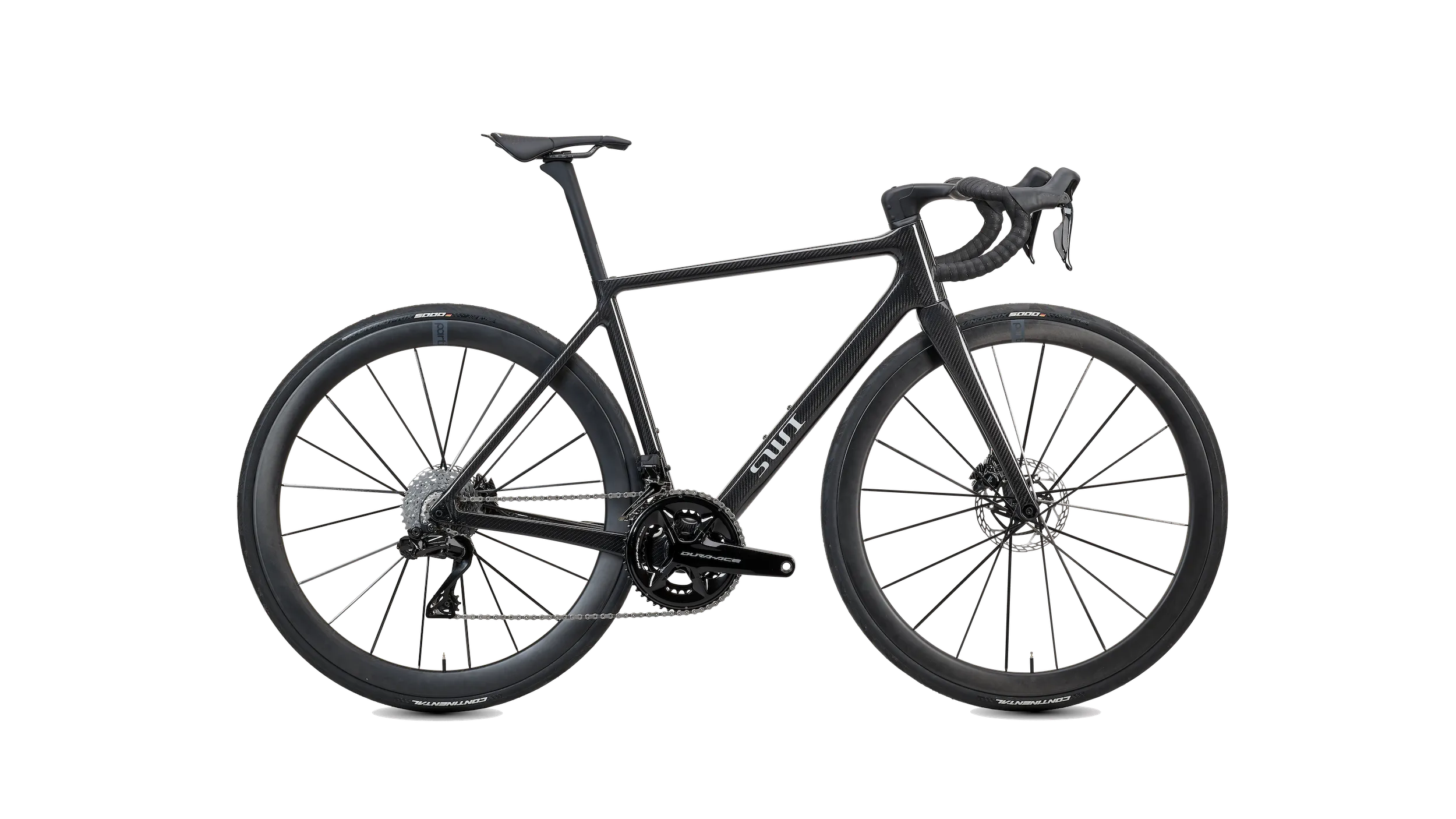



There are easier ways to get attention than covering a bicycle in 24-karat gold.
You could make it louder. More aggressive. Add wings, sharper lines, bigger logos. You could chase the familiar playbook of luxury: excess.
We chose something slower.
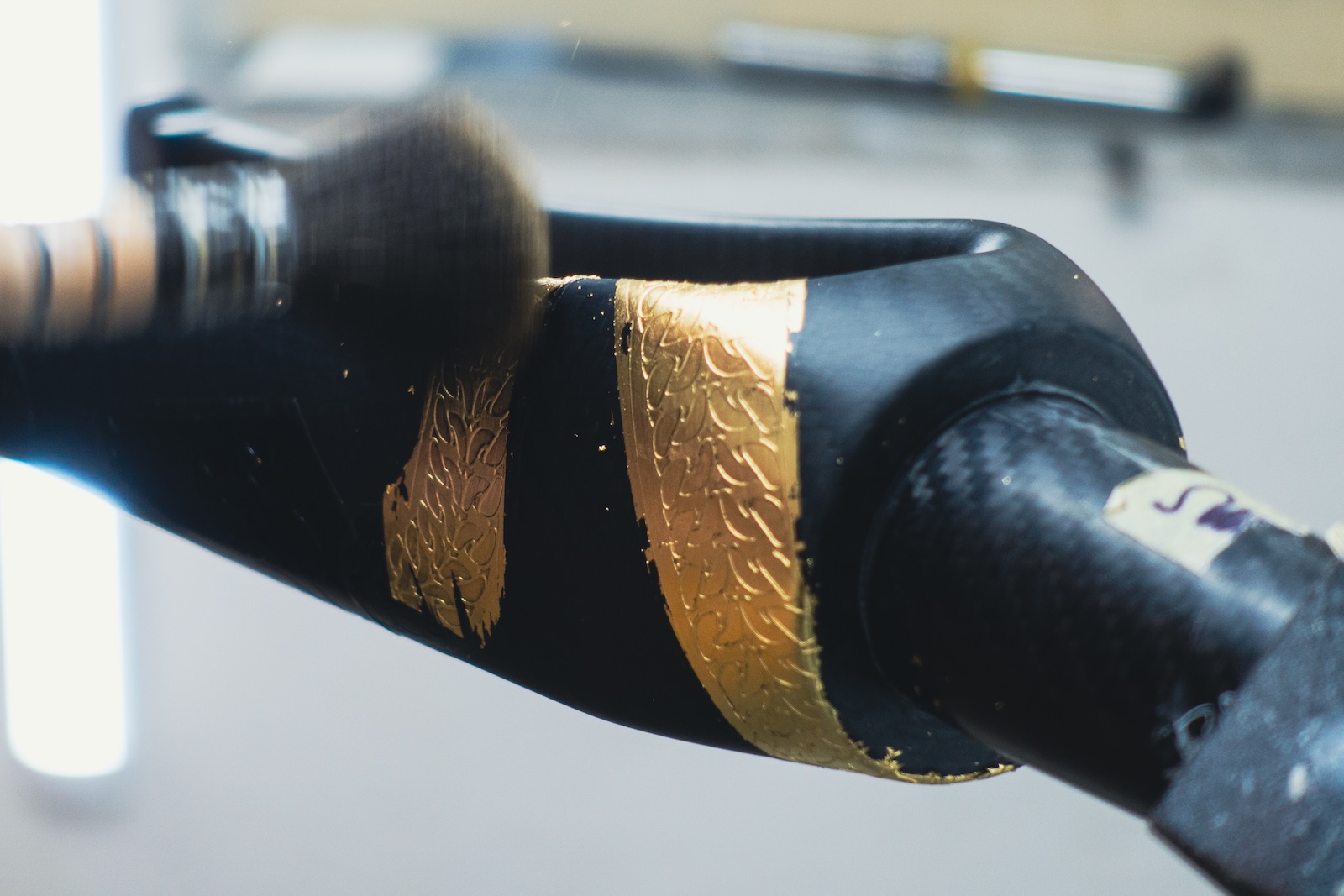
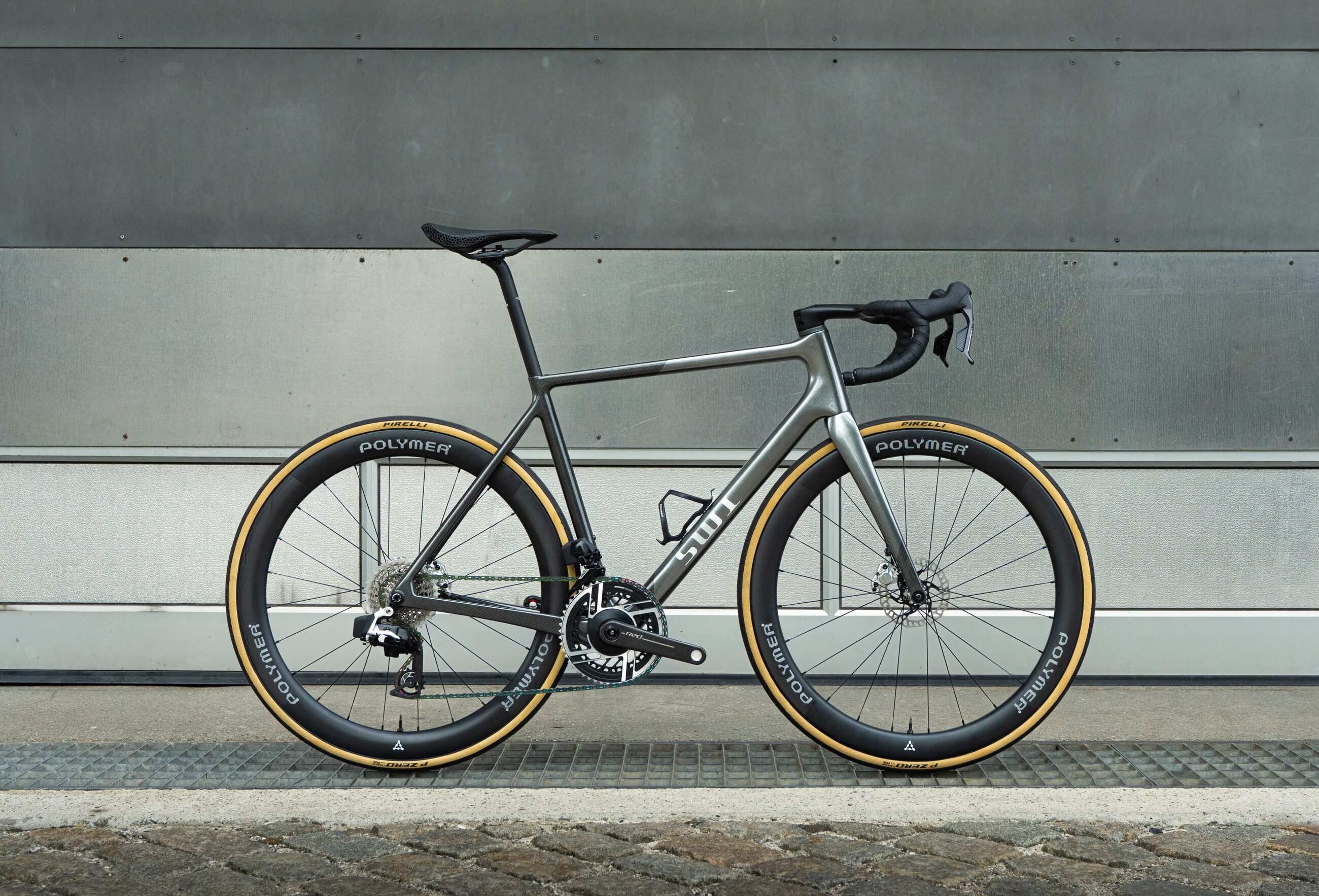
At Rakuten Fashion Week Tokyo this year, among the movement of couture silhouettes and carefully choreographed spectacle, sat a bicycle that seemed to operate on a different frequency. A special-edition Serpent frame, hand-finished with real gold leaf across hundreds of individual vertebrae elements. It was not trying to dominate the room. It simply waited for people to come closer.
And they did. Because the closer you moved towards it, the more questions appeared. Not what is it? But why is a bicycle here?
The numbers have become easy. The feeling has become harder.
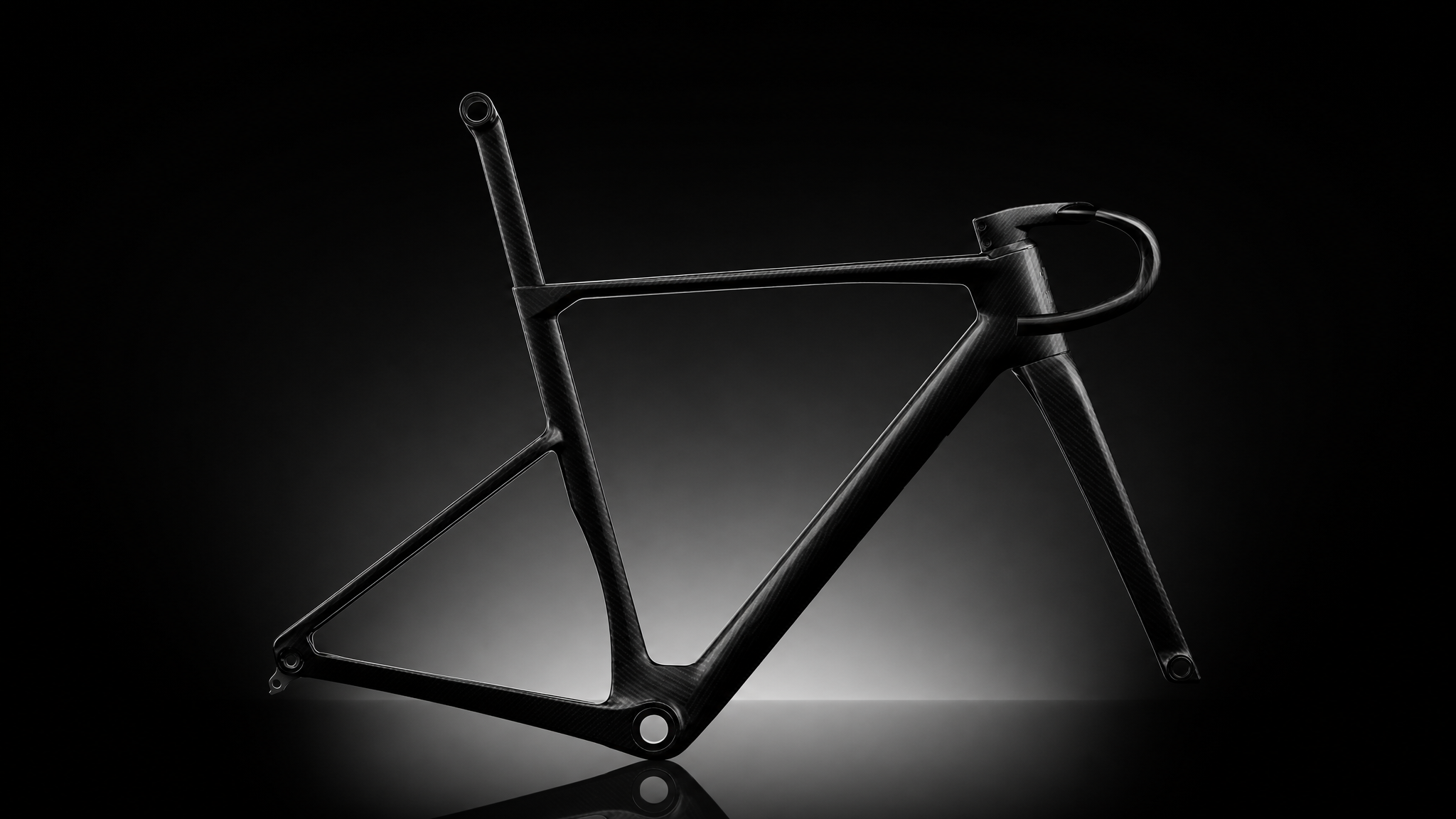
Luxury products increasingly exist in an awkward moment. Technology has become democratised. Manufacturing quality has become frighteningly good. Carbon fibre frames, once reserved for elite corners of the sport, now arrive from every direction promising lighter, stiffer, faster.
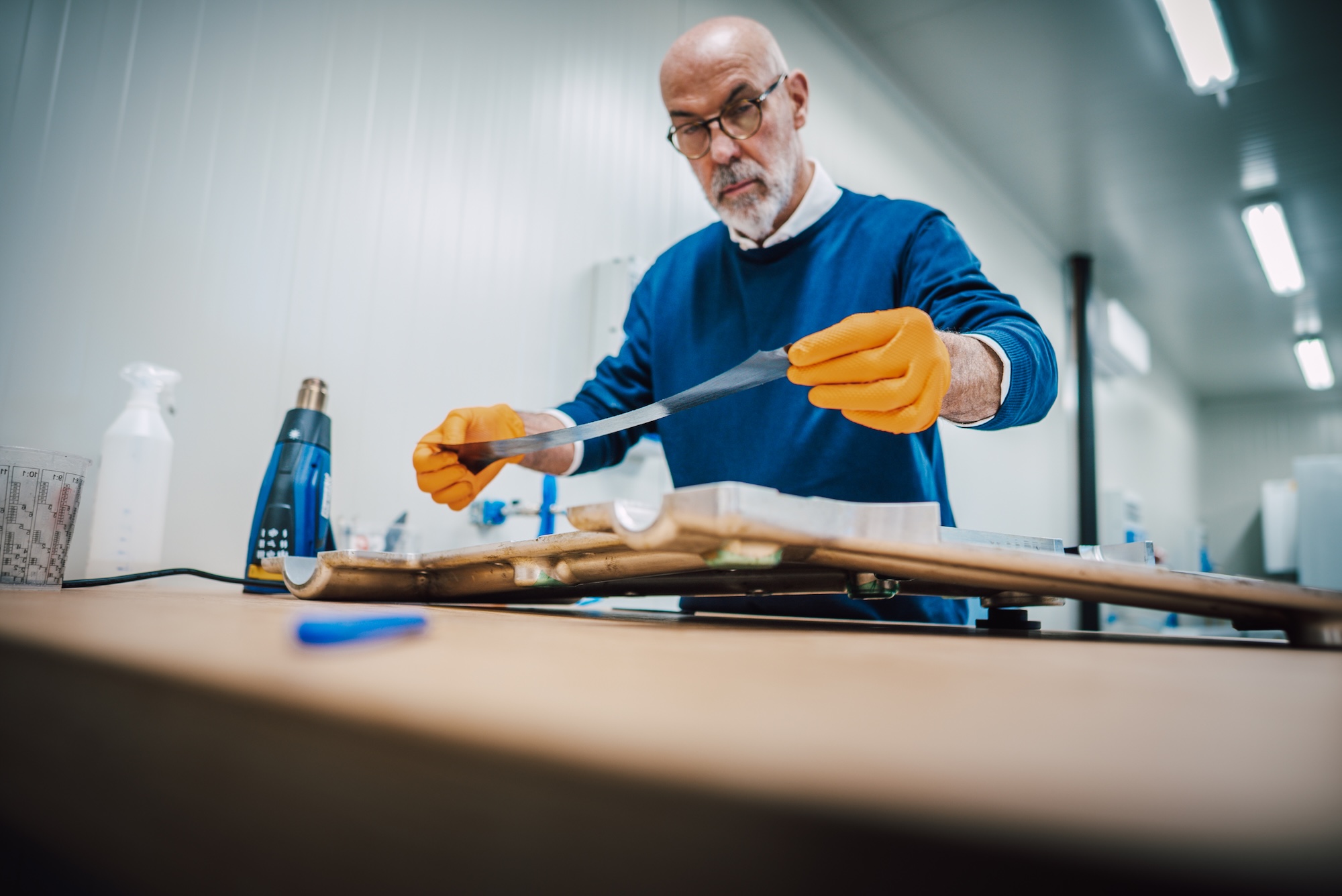
SWI has quietly built its identity around that distinction. While much of cycling continues speaking in watts and wind tunnel figures, we have spent years talking about something far less measurable: ride feel. The sensation of a machine disappearing beneath you. The subtle feeling that power transfer, comfort and handling are behaving as one uninterrupted experience rather than separate engineering decisions fighting one another.
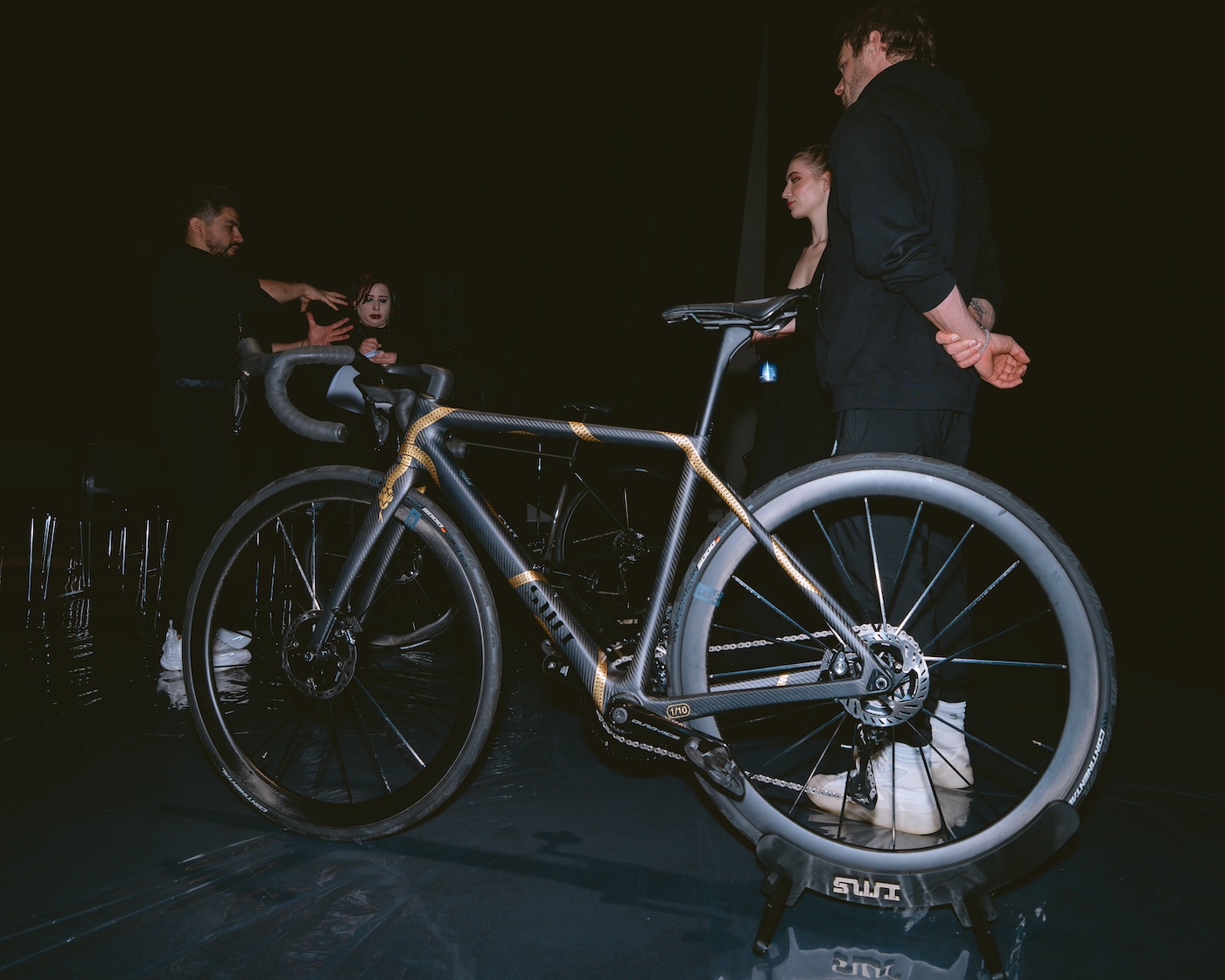
Carbon is simply fabric wearing different clothes
It is a surprisingly emotional way to talk about bicycles. Then again, fashion talks this way all the time.
Fabric is not chosen simply because it covers the body. It changes movement. It changes personality. It changes how someone enters a room.
The partnership with the designer Eduardo Ramos emerged from that same thinking. His Materia VI collection explored material itself as identity — texture becoming narrative, construction becoming expression. Suddenly the bridge between cycling and fashion did not seem strange at all.
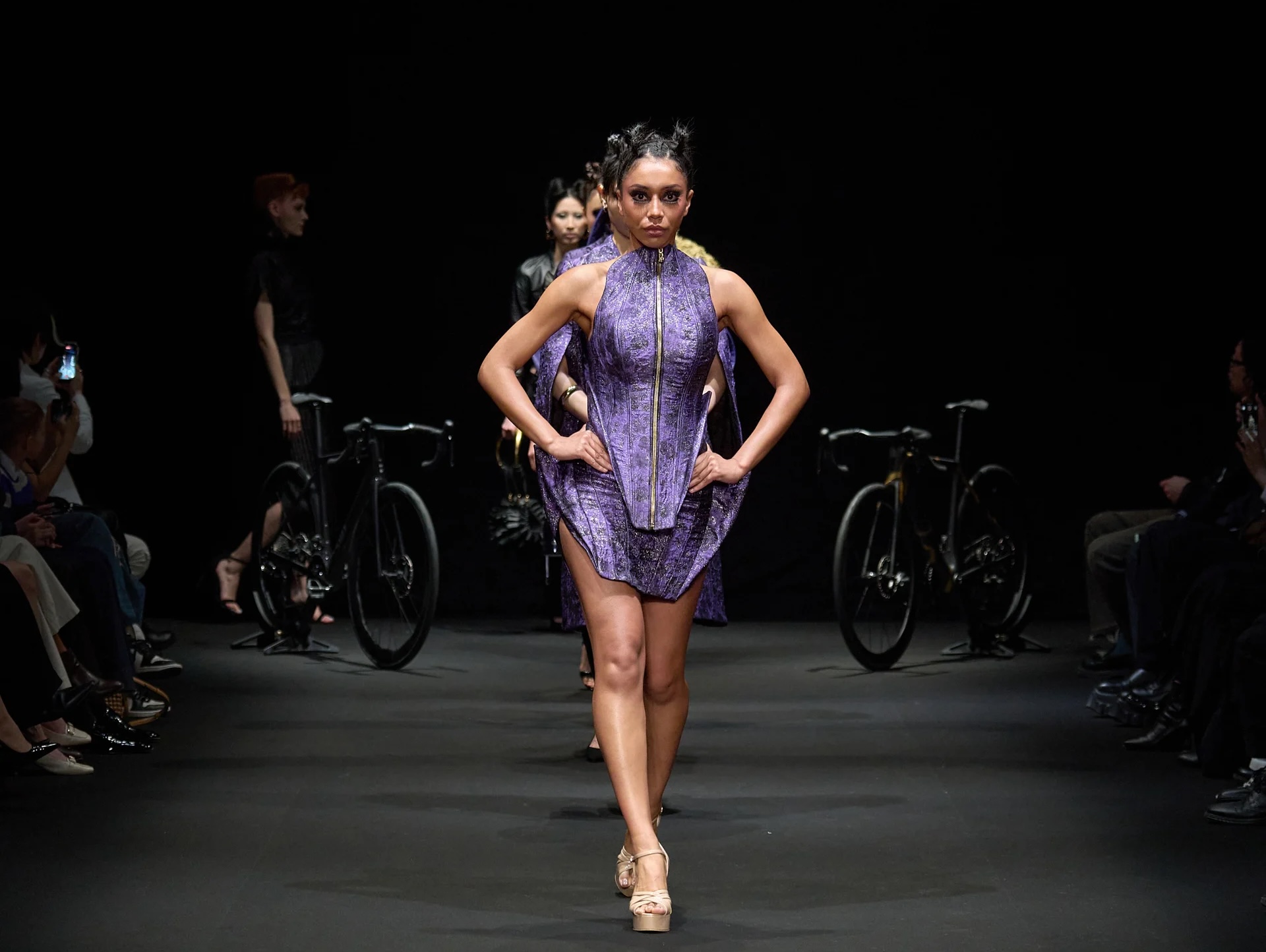
Everyone notices gold. Very few people notice labour.
The gold itself almost became secondary.
The Serpent required more than 700 individually applied details, each laid by hand through a process developed alongside Tom Hnida and Chroma Studio. It was slow work. Deliberately slow work.
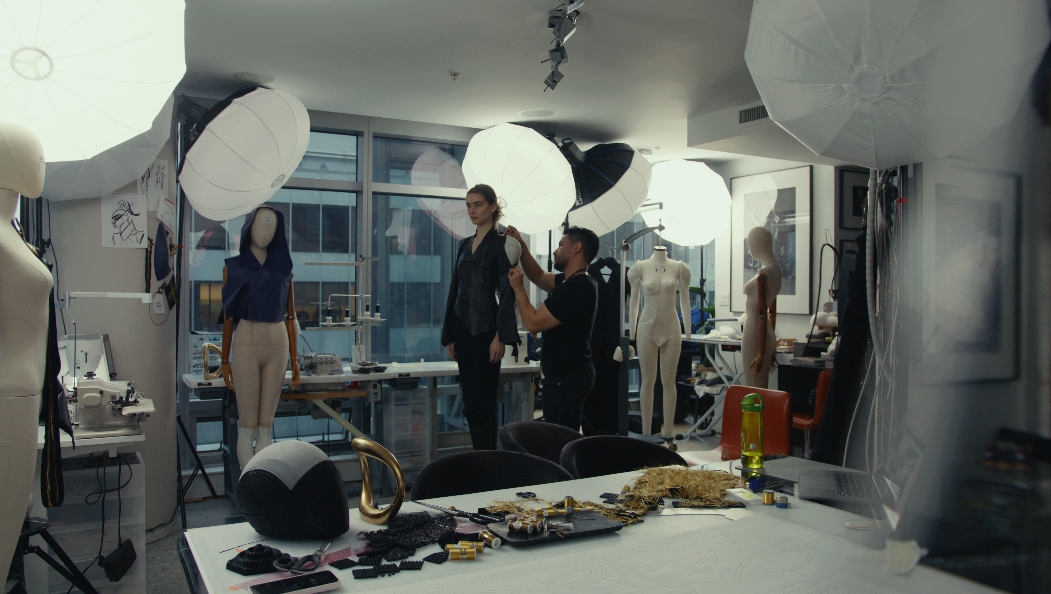
Someone inevitably asked whether there was an easier way to achieve the same effect. Probably. But easier has rarely been the point.
Real luxury has never been about adding expensive things. Anyone can do that. Real luxury is care. It is effort hidden beneath the surface. It is spending hours on something most people may never consciously notice.
You see it in hand-tailored jackets. You see it in mechanical watches. Occasionally, if you are paying attention, you see it in bicycles.
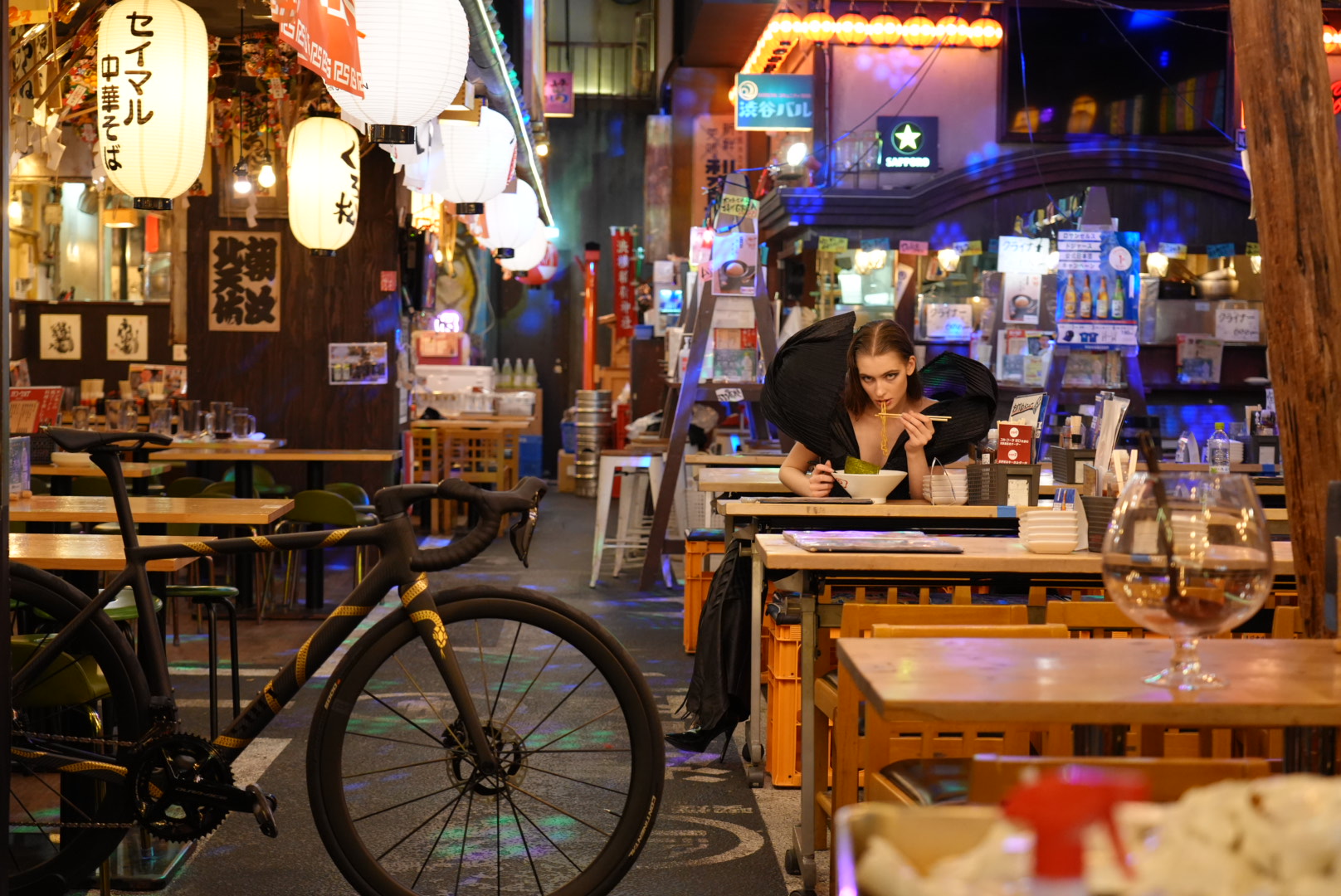
Which perhaps explains why SWI looked unexpectedly comfortable inside a fashion week environment. Because despite appearances, it was not entering a new world. It was simply discovering it had been speaking the same language all along.
%2520on%2520SWI_%2520The%2520Italian%2520Paradox_%2520Aura%252C%2520Heritage%25E2%2580%25A6%2520and%2520sometimes%2520Utter%2520Chaos.jpeg)