

The Definition
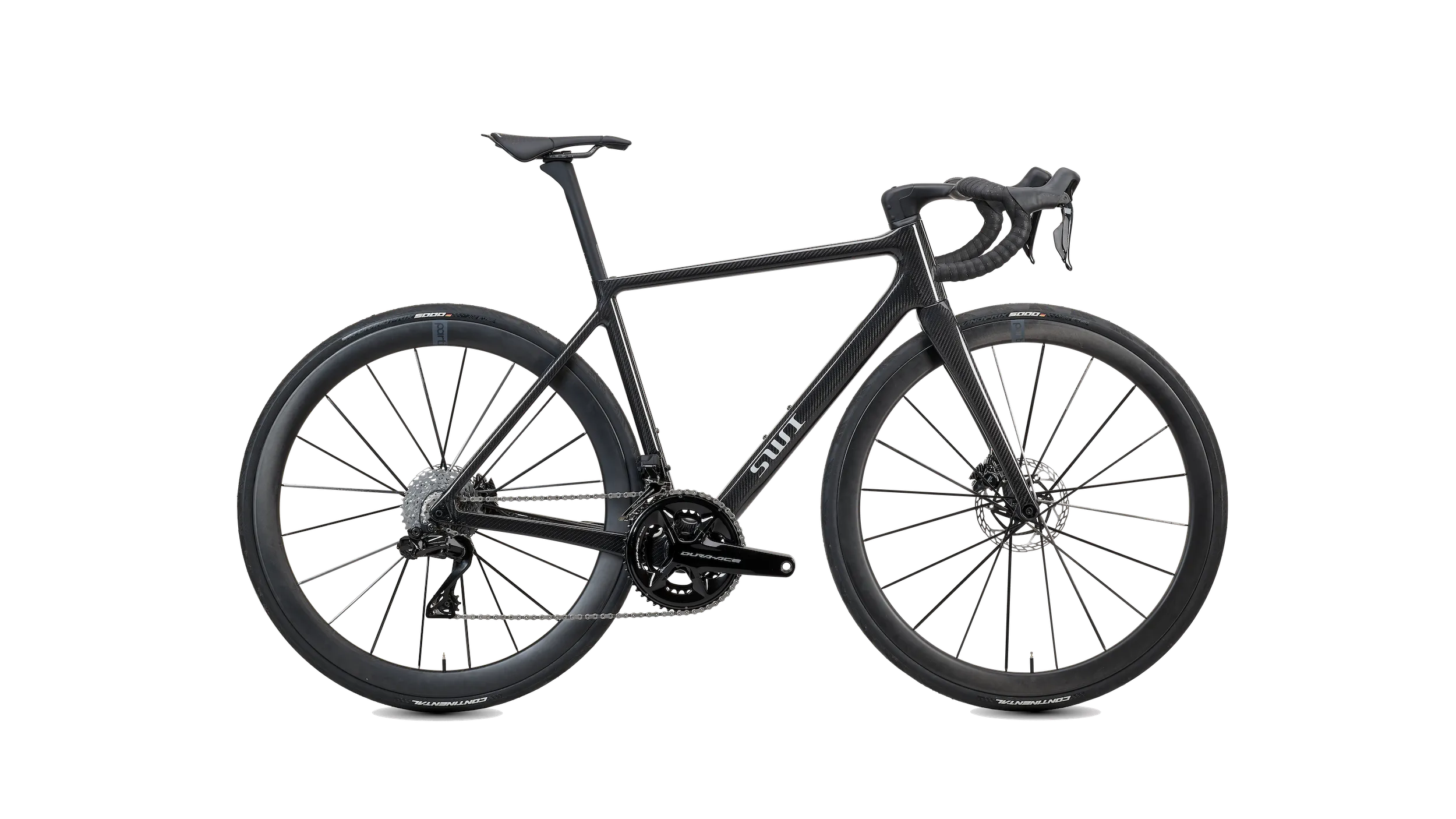
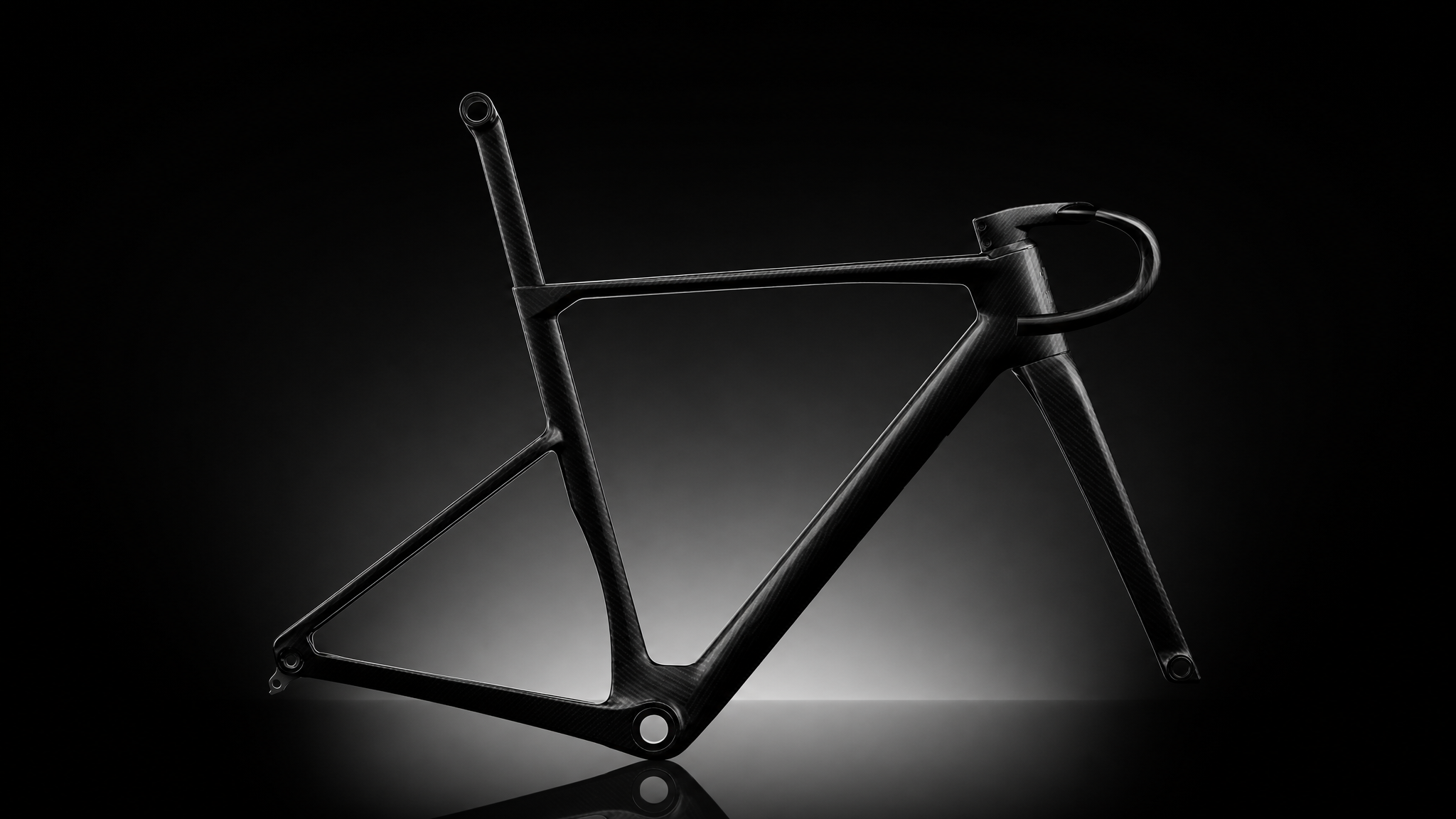
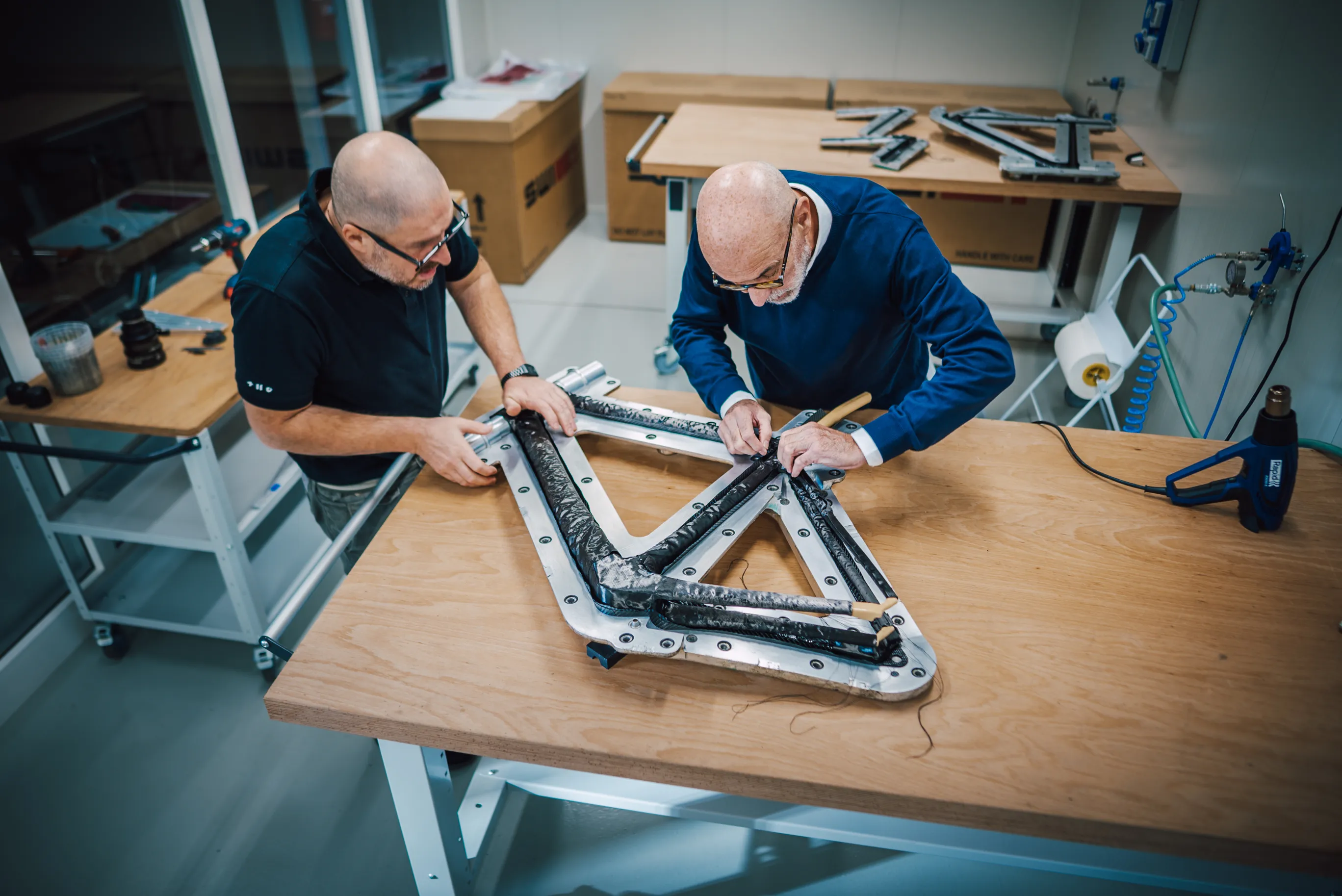
A monocoque frame is one in which the outer shell carries the load. Rather than joining separate tubes, the entire structure is laid up as a single piece of carbon fibre and cured in one mould, emerging as one continuous shell.
The word comes from aviation — French for single shell — and describes the same principle used in Formula 1 chassis and America's Cup hulls. Load travels through an unbroken structure instead of being passed across joints.
Most carbon bicycle frames marketed as monocoque are not. They are moulded in sections — front triangle, seat stays, chain stays — and bonded together with adhesive. SWI builds what we call a Unishell Monocoque: one uninterrupted carbon shell formed in a single mould, with no bonded joints anywhere in the structure.
The Comparison
Almost every carbon frame is built one of four ways. The difference is where — and whether — the structure is interrupted.
| Construction | How it's made | Joints in the structure | Geometry | Laminate tuned per rider |
|---|---|---|---|---|
| Unishell MonocoqueSWI | Laid up and cured as one piece in a single mould | None | Seven sizes | Yes |
| Modular monocoque | Moulded in sections, then bonded with adhesive | At every section boundary | Stock sizes | No |
| Tube-to-tube | Pre-made tubes mitred, then wrapped and bonded | At every tube junction | Custom | Sometimes |
| Lugged carbon | Tubes bonded into pre-formed carbon lugs | At every lug | Limited by lug angles | No |
The trade-off is usually forced. Monocoque construction gives you an uninterrupted structure but a fixed set of sizes; custom builders reach for tube-to-tube because cutting and bonding tubes is the only way to change the shape. SWI takes the third option. The silhouette comes from seven sizes, as it must in a single mould — and everything inside it does not. The carbon layup is specified for one rider, which is the variable nobody else moves.
Independently tested
“There are no join lines in the lugs.”
Rob Granville · Carbon Bike Repair
Carbon Bike Repair has inspected and repaired around 16,000 frames in twelve years. They scanned an SWI frame for geometric accuracy, then cut it open and compared its structure against a high-end race frame.
Three Principles
01
SWI is unique in cycling in building frames as one uninterrupted carbon shell formed in a single mould. There is no adhesive in the load path, because there is nothing to join.
02
A frame that leaves the mould in one piece is far more geometrically accurate than one assembled from parts. Tolerances are held within 0.1mm — every frame, every time.
03
The thin-ply composite used in Formula 1 chassis, America's Cup foils and Richard Mille watches. Patented by North Thin Ply Technology in Switzerland, and exclusive to SWI in cycling. Fourteen layers per millimetre.
Custom Layup
Because the frame is formed in a single mould, the carbon inside it can be varied without changing the shape. SWI adjusts the number of TPT™ layers across twelve zones of the frame — the bottom bracket, the head tube, the stays — according to your weight, your power output and the ride feel you want.
Two riders can order the same model in the same size and receive structurally different bicycles. A heavier rider putting down high sustained power gets more material where the load concentrates. A lighter rider gets compliance where it matters instead of stiffness they cannot use.
This is what custom means at SWI. Not a different shape — a different structure.
Build YoursCommon Questions
A frame in which the outer shell carries the structural load, formed as a single piece rather than assembled from separate tubes. The term comes from aviation and describes the same principle used in Formula 1 chassis. A true monocoque has no joints in the load path.
They solve different problems. Tube-to-tube allows fully custom geometry because the builder controls each tube's length and angle, at the cost of a bonded joint at every junction. A monocoque has no joints but is normally limited to the shapes its mould can produce. SWI's approach keeps the uninterrupted shell and varies the carbon layup inside it instead.
Not in the conventional sense of changing tube lengths, which is why most custom builders use tube-to-tube construction. SWI customises the structure rather than the silhouette: the carbon layup is specified across twelve zones for each rider's weight, power output and preferred ride feel.
Thin Ply Technology — a composite made of very thin carbon layers, patented by North Thin Ply Technology in Switzerland. It is used in Formula 1 chassis, America's Cup foils and Richard Mille watch cases. SWI holds the worldwide exclusive for TPT™ in cycling, and builds at fourteen layers per millimetre.
The Aequus frame is 720–790g and the Leve is 640–710g. The range within each model depends on your custom carbon layup — a heavier, higher-power rider receives more material than a lighter one.
Every frame is laid up, cured and finished by hand in SWI's workshop at Villafranca Padovana, in the Veneto region of Italy. The TPT™ carbon itself is a Swiss composite technology.
As Featured In





Tell us a little about yourself. We reply personally within 24 hours — no automated replies.
Something went wrong. Please try again.
Your details are kept private and never shared with third parties.
Your message is with the team in Italy and a confirmation is on its way to your inbox. We reply personally within 24 hours.