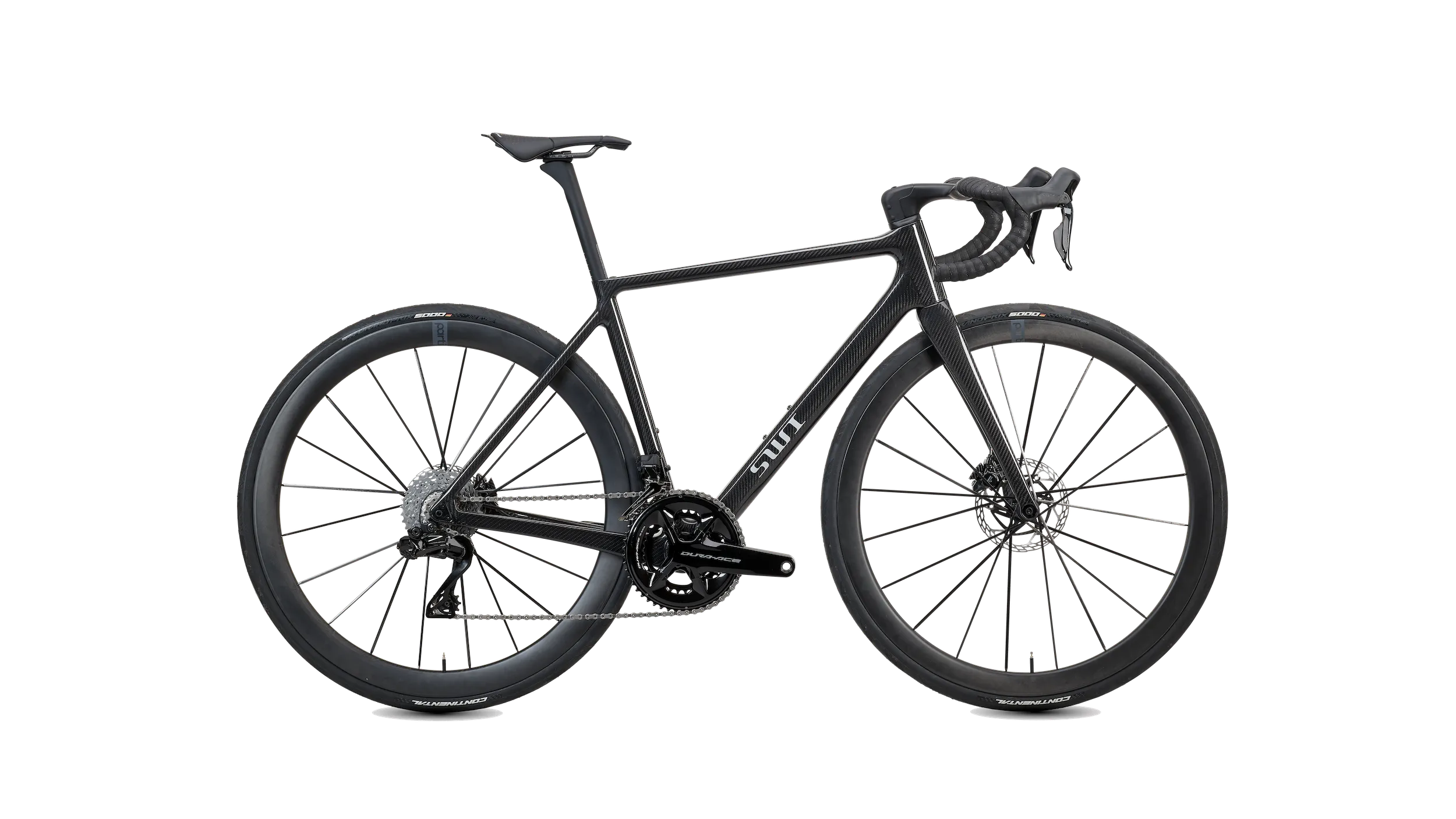
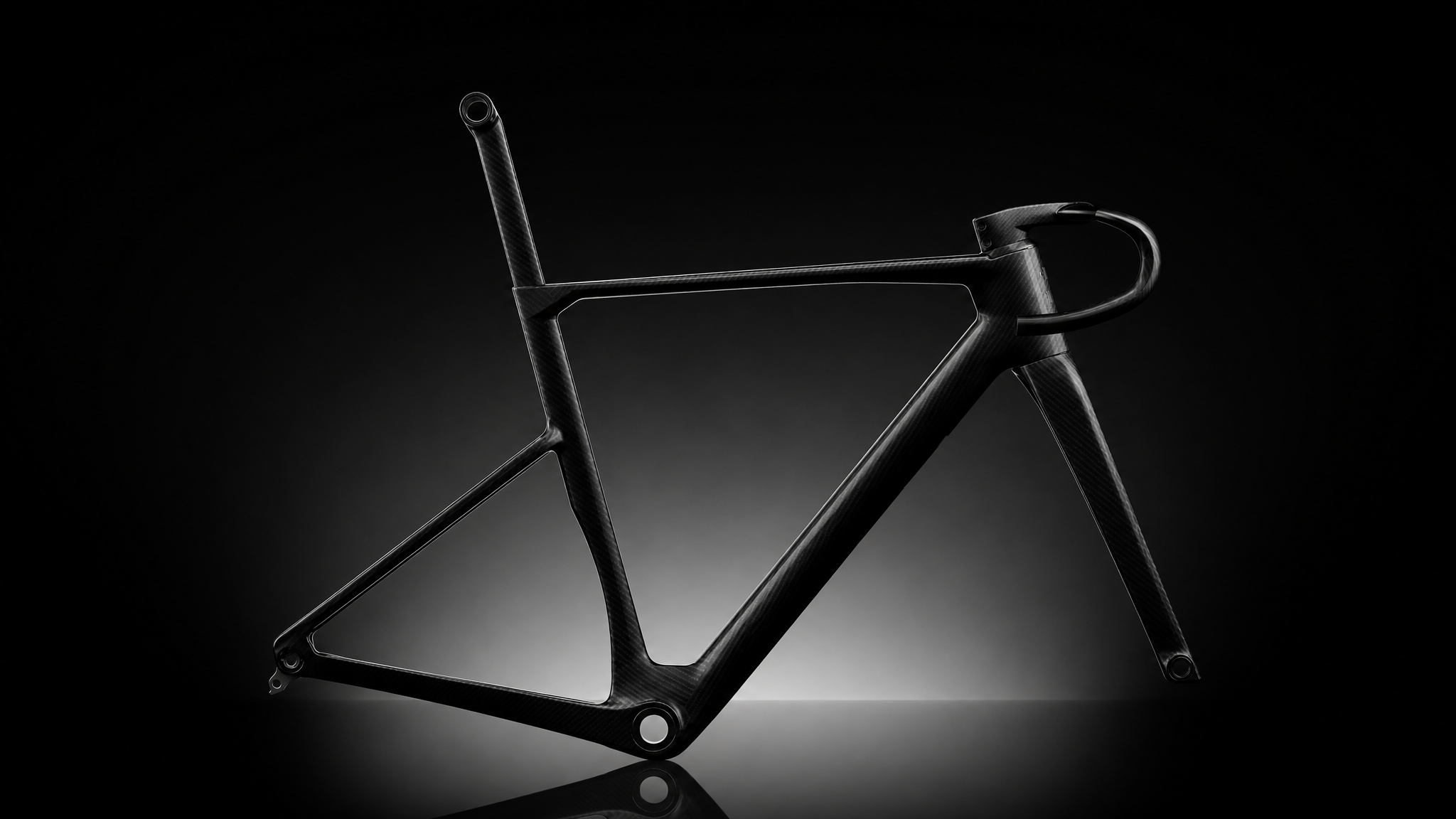


Click the image to magnify
Two Laminations
Standard
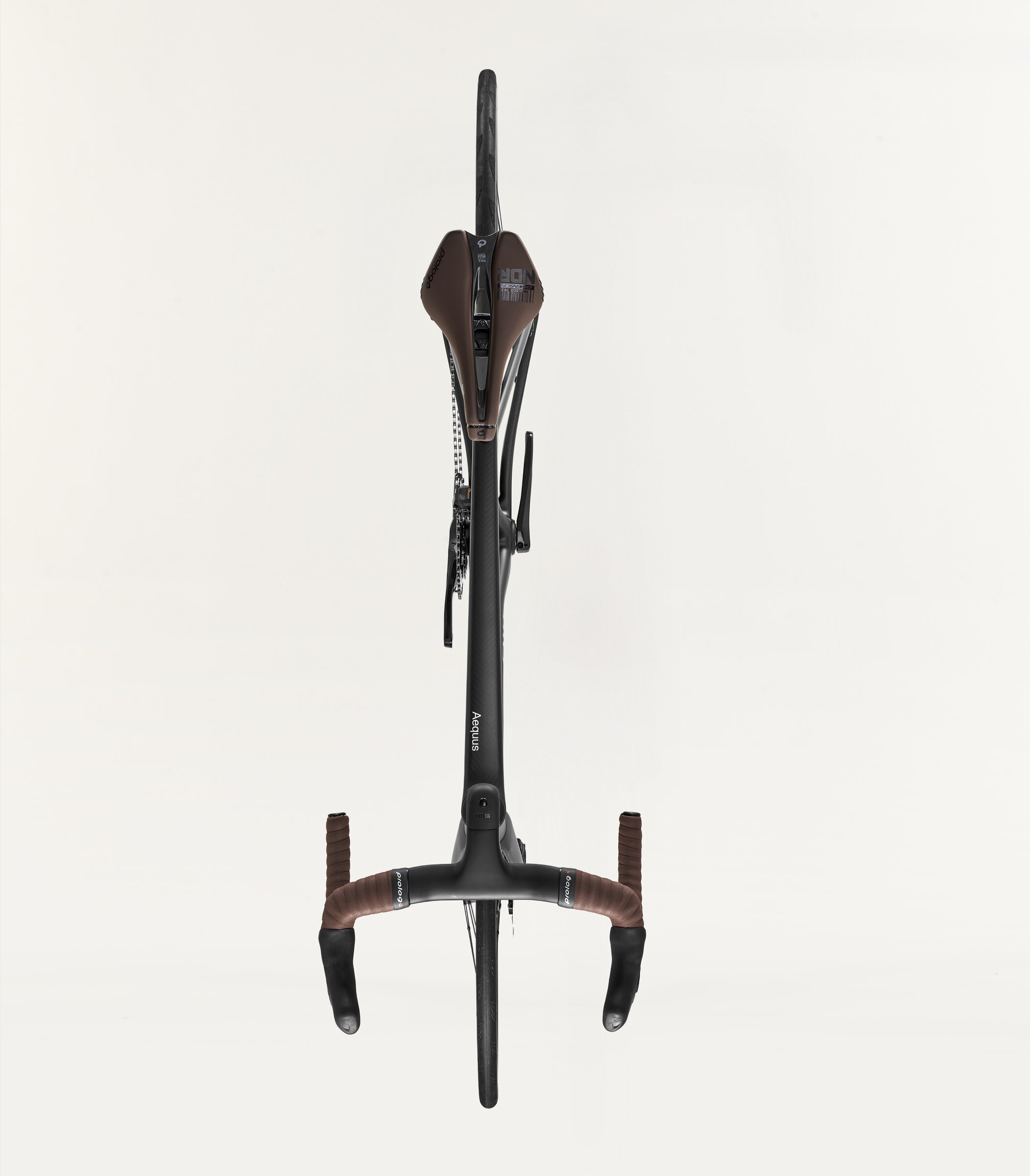
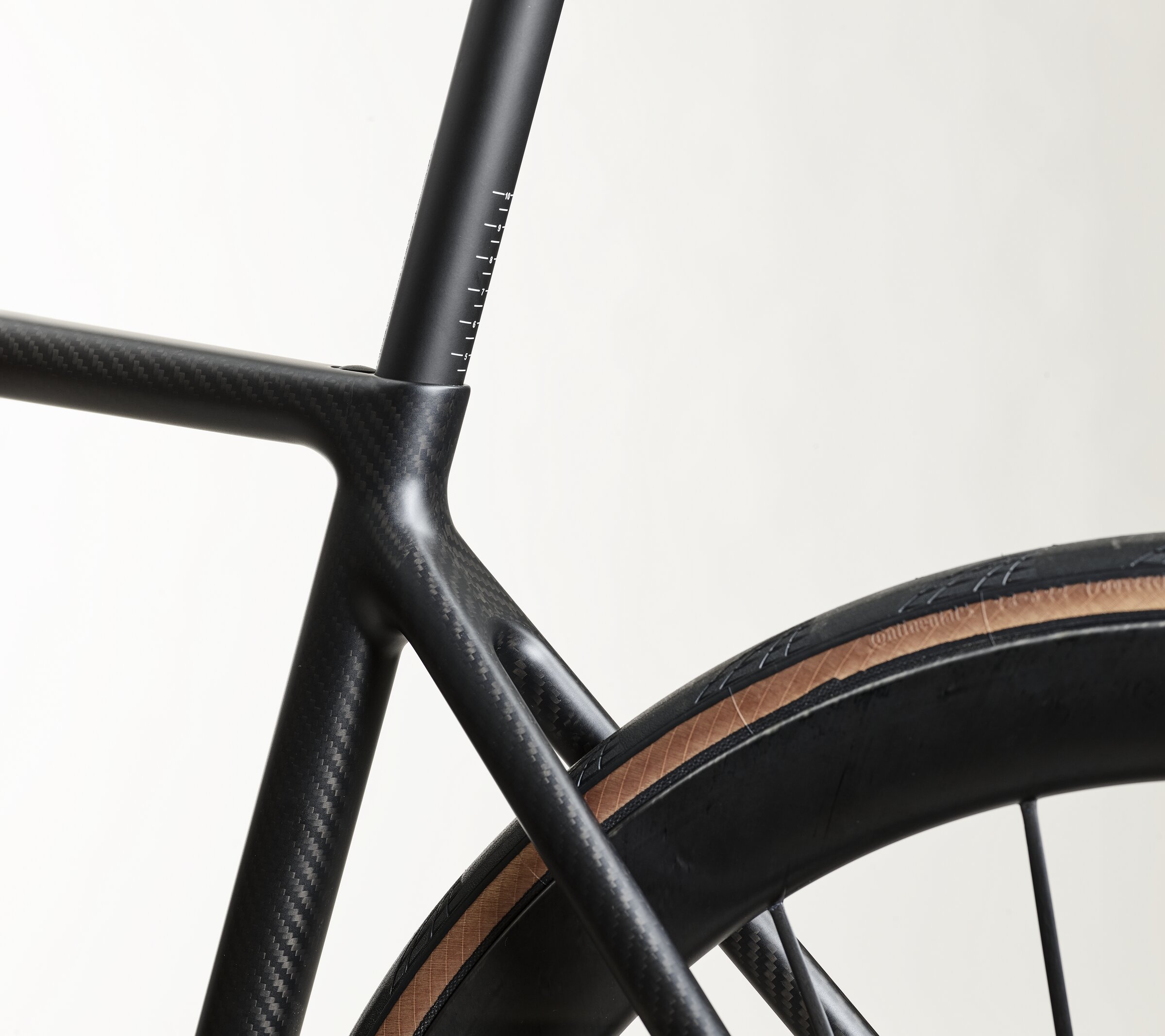
A woven textile of 3,000 filaments per tow, laid in a diagonal that reads as a herringbone under clearcoat. It is the signature SWI surface, and the reason a raw Aequus looks like nothing else on the road.
720–790 g · €6,990
Leve
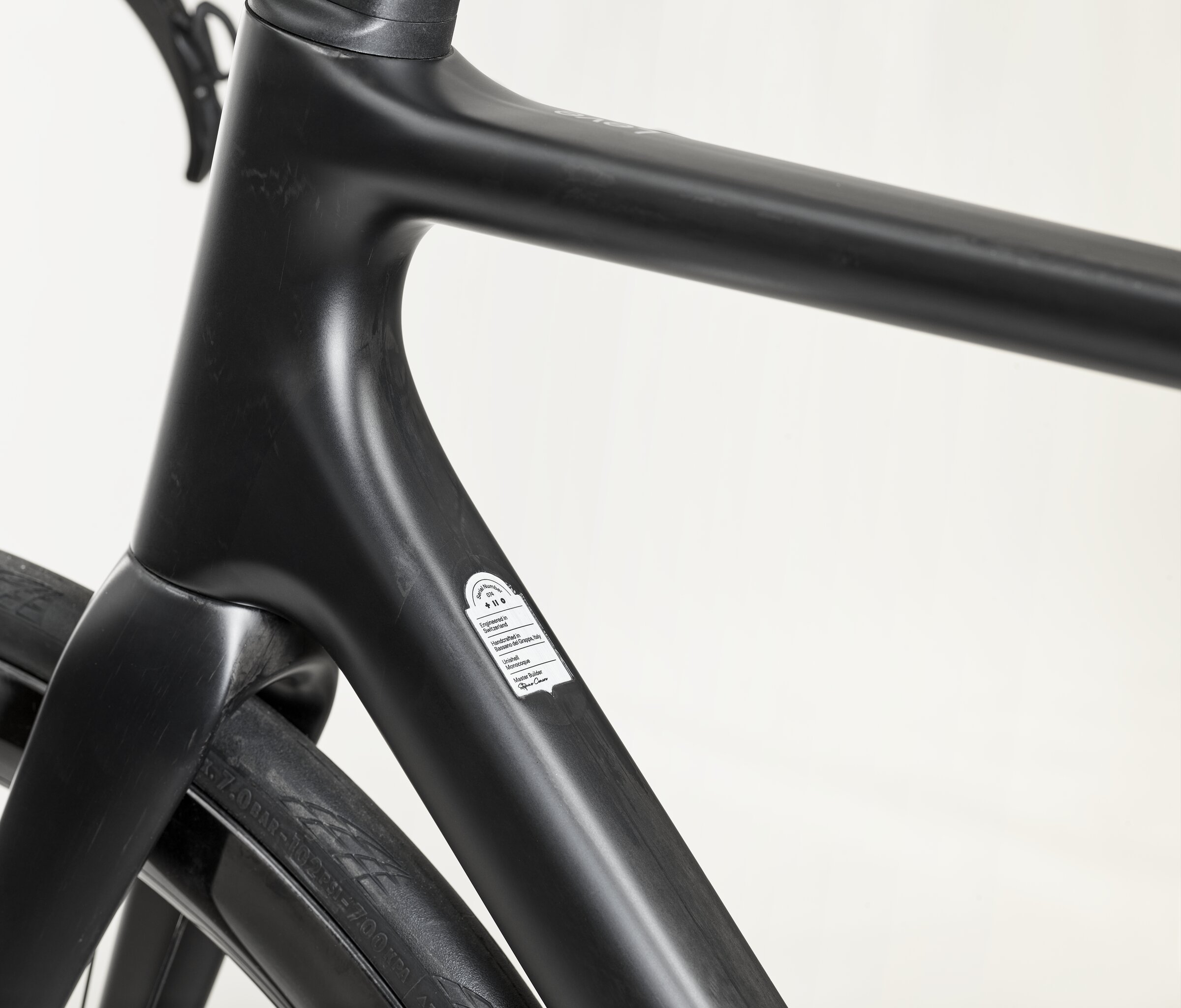
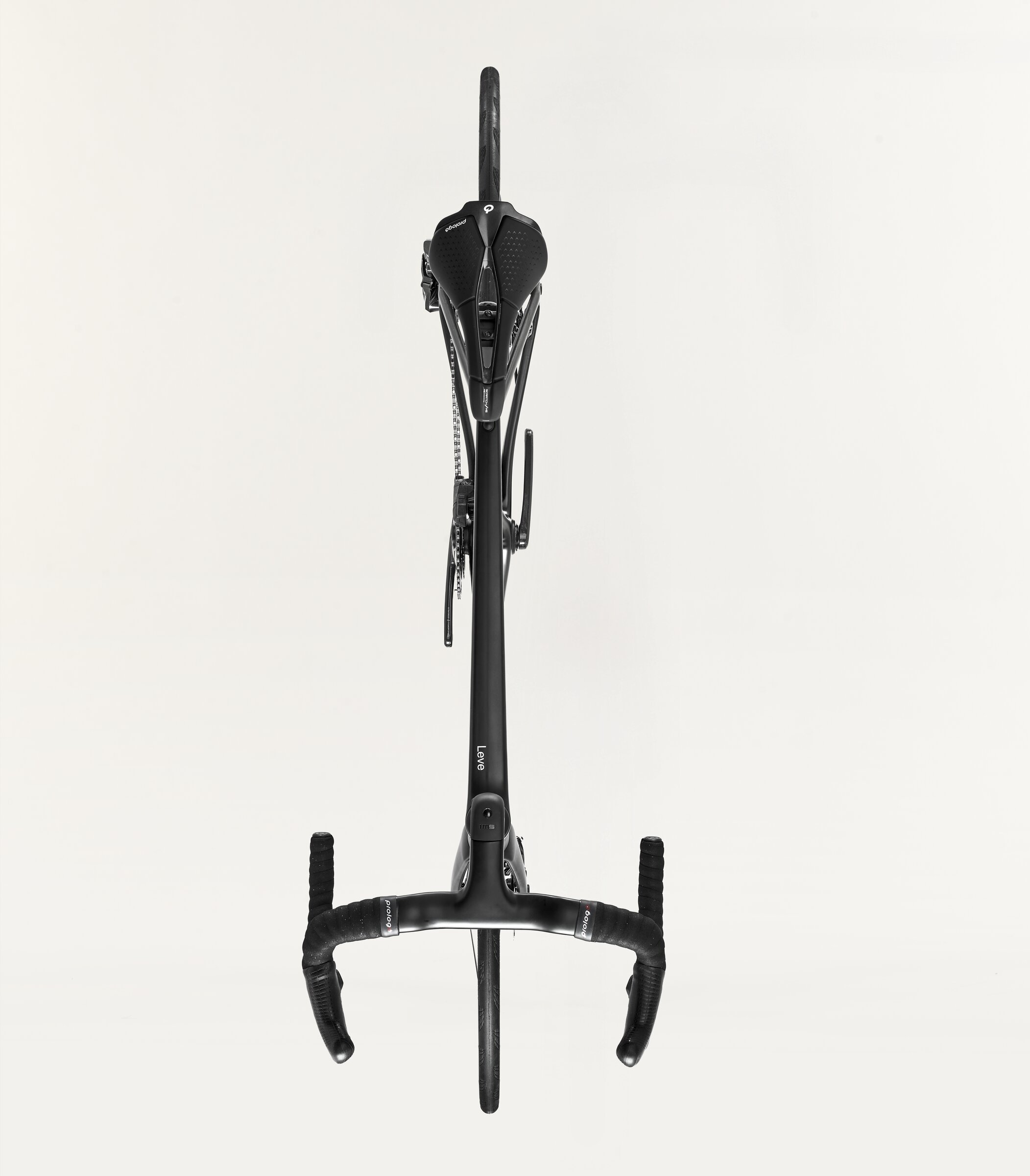
No weave. The thin ply runs straight, outside as well as in, and the frame loses about ninety grams — roughly the weight of a gel and a half, taken out of the structure rather than the build kit.
640–710 g · €6,990
Same mould. Same geometry. Same seven sizes. Same price, and all fourteen finishes included on both. The only question is which surface you want to look at for the next fifty years.
You Can See It
Aequus
Woven outer skin. From a pace length away it is a black frame; from arm's reach the diagonal starts to move.
Aequus Leve
Thin ply throughout. The same shell, ninety grams lighter, with nothing on the surface to catch the light.
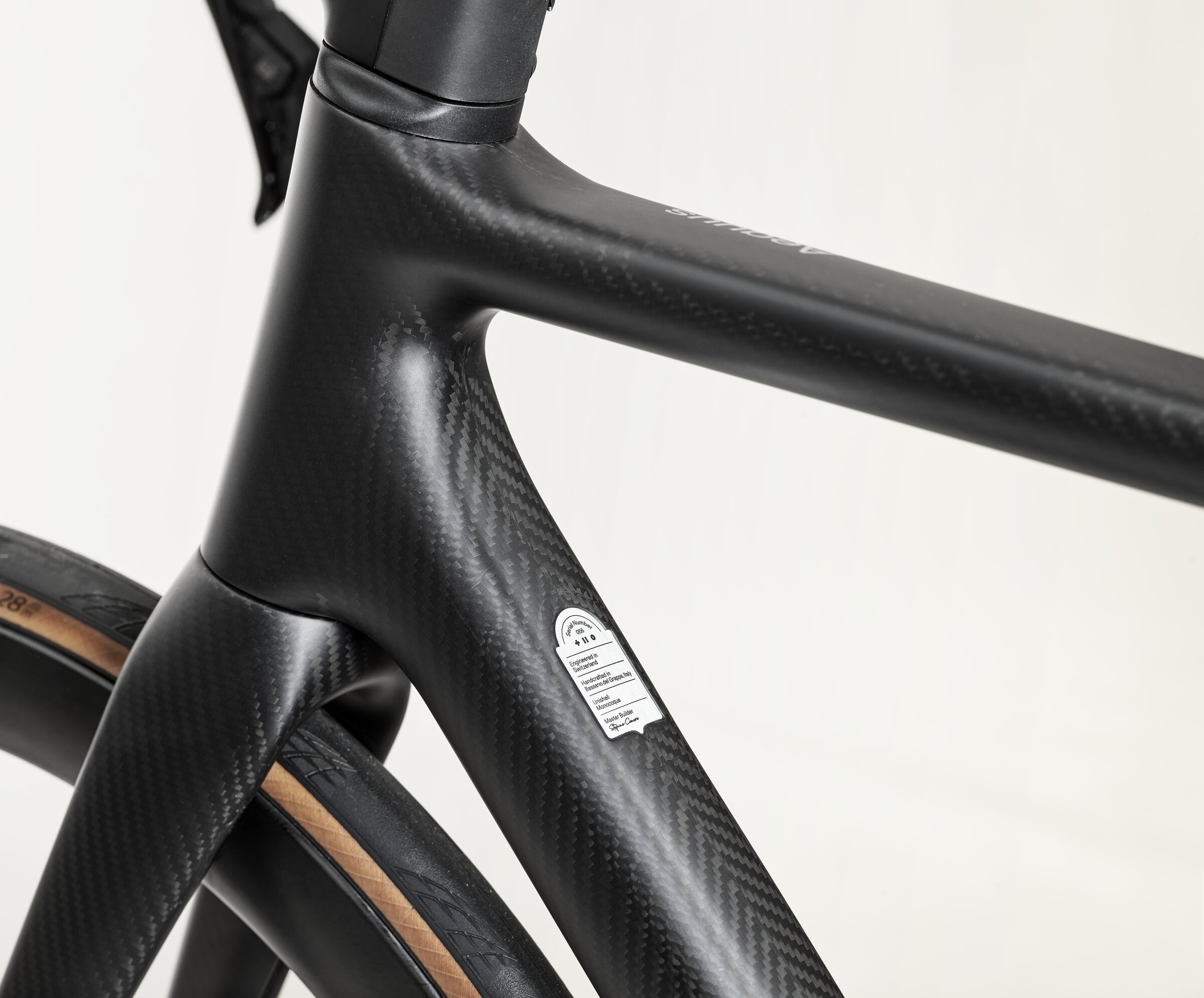
Aequus
The same weave carries through the seat cluster and out along the stays.

Aequus Leve
Unidirectional here too. It is not one lucky angle — it is the whole frame.
Both frames photographed in the same matt finish, at the same angle, under the same light. The only difference you are looking at is the lamination. Click any image to magnify.
Under a clearcoat the two are unmistakable. The 3K herringbone catches light across the diagonal, so the down tube shifts as you walk past it. The Leve’s unidirectional outer has no pattern to catch — it reads as depth rather than texture, closer to lacquer over graphite.
Under a solid paint finish neither is visible, and the choice is purely about weight. Under Ghost, where dual-opacity paint lets the surface breathe through, the herringbone is the whole point — which is why most Ghost builds are standard lamination.
Thin Ply
Conventional carbon fabric is comparatively thick, so a layup reaches its target stiffness in fewer, heavier layers — and every layer thicker than it needs to be is weight doing no work.
TPT™ — Thin Ply Technology, patented by North Thin Ply Technology in Switzerland and held by SWI under worldwide exclusive for cycling — goes the other way. Plies as fine as 30 microns build stiffness in many thin layers instead of few thick ones: fourteen layers per millimetre against roughly five for standard carbon fibre, each placed where the load actually is.
On the Leve lamination that logic runs to the outer skin as well. Nothing is there to look good — every ply is structural, which is exactly where the ninety grams comes from. The layup underneath is still specified for you: fibre orientation, ply schedule and resin distribution tuned to your weight, power output and riding style across twelve zones.
Weight saved
−90 g
Layers per mm
14
Tuned zones
12
In Practice
On the flat, ninety grams is noise. On an hour-long climb it stops being a spec-sheet argument and becomes the last twenty minutes. Riders who spend their season going uphill tend to choose the Leve; riders who want the weave choose standard. Both are the same frame underneath, and neither costs more than the other.
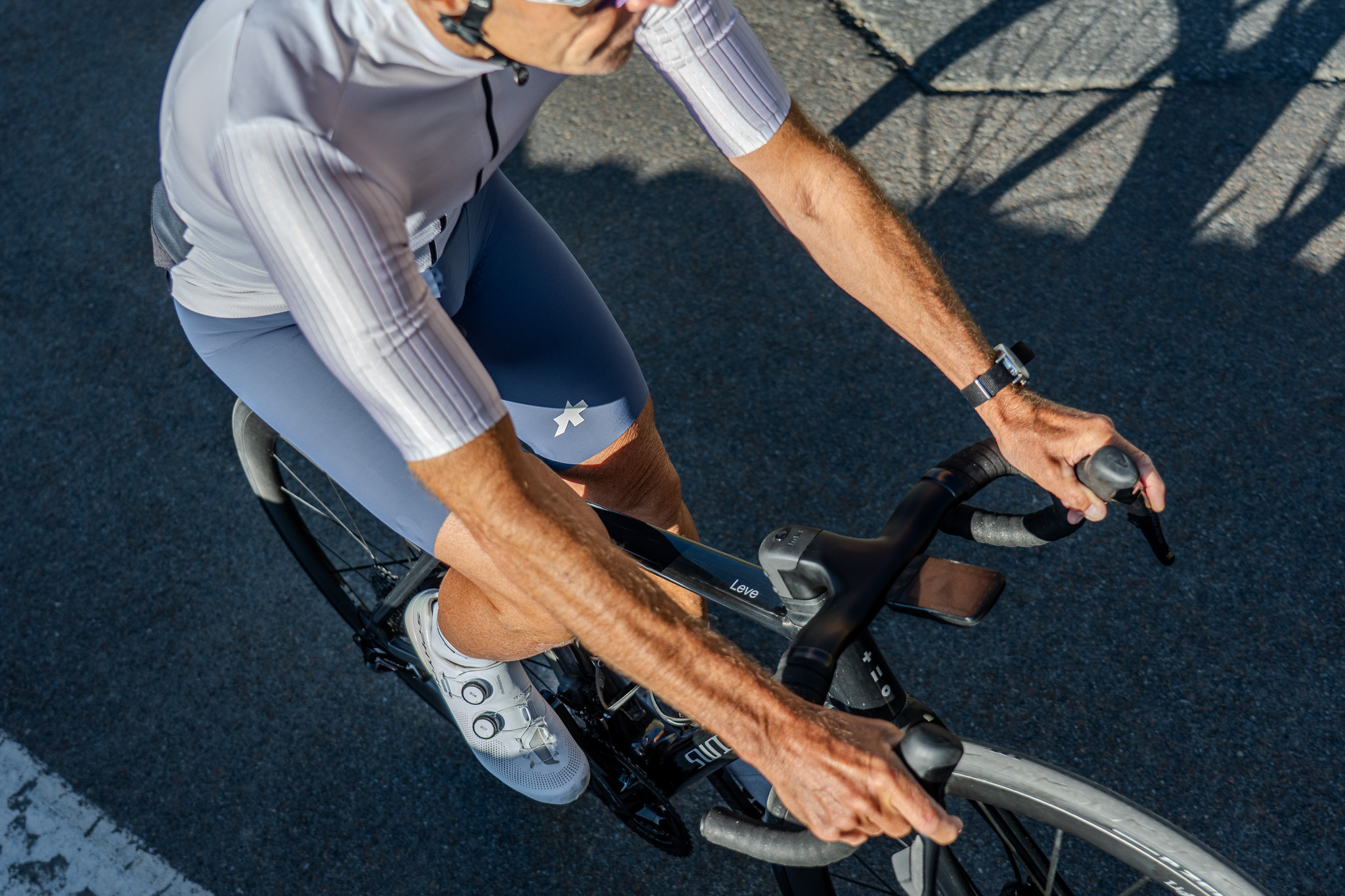
Michael Blann rides a 52 Aequus Leve in Raw Gloss.
The Finish
Clearcoat and Ghost reveal the lamination; solid colours cover it. All fourteen are included in the frameset price, on either lamination.
Clearcoat
Raw carbon, sealed. The lightest option, and the truest expression of the structure beneath.
Solid
Deep gloss colour. Saturated single-tone finishes laid down over carbon.
Ghost
Tinted reveal. Dual-opacity paint — 80% front, 40% rear — lets the carbon breathe through a wash of colour that shifts in the light.
Choose Your Lamination
Lamination is a step in the build, not a different bicycle. Every Aequus is laid up by hand, cured individually in a single mould and finished by one craftsman in Villafranca Padovana — no joints, no lugs, no glue. Start the configurator, choose your finish and your fit, and pick standard or Leve when you get there.
Frameset from €6,990 in either lamination · Custom carbon layup €8,990 · Complete builds from €13,390
As Featured In



Tell us a little about yourself. We reply personally within 24 hours — no automated replies.
Something went wrong. Please try again.
Your details are kept private and never shared with third parties.
Your message is with the team in Italy and a confirmation is on its way to your inbox. We reply personally within 24 hours.