

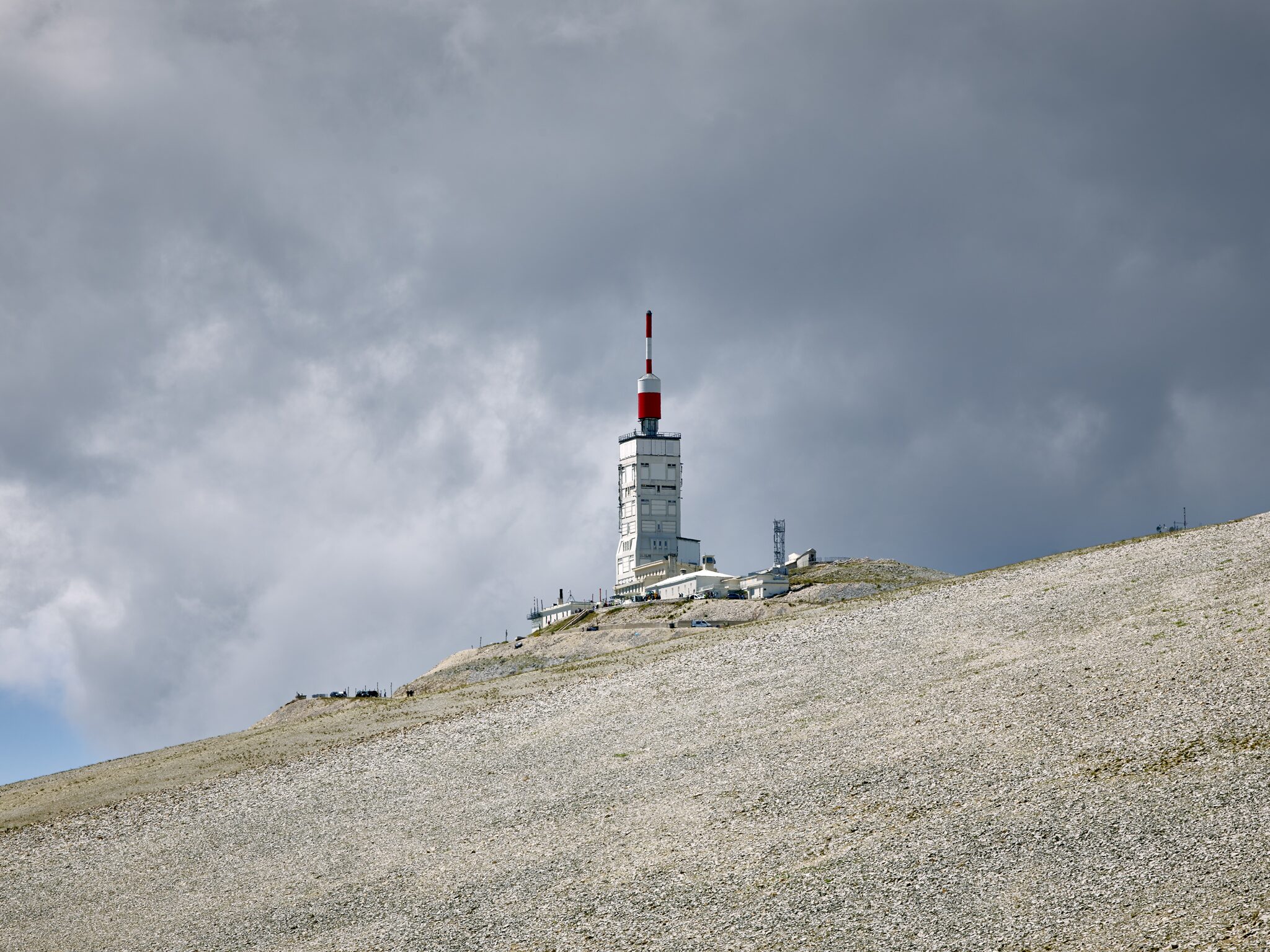
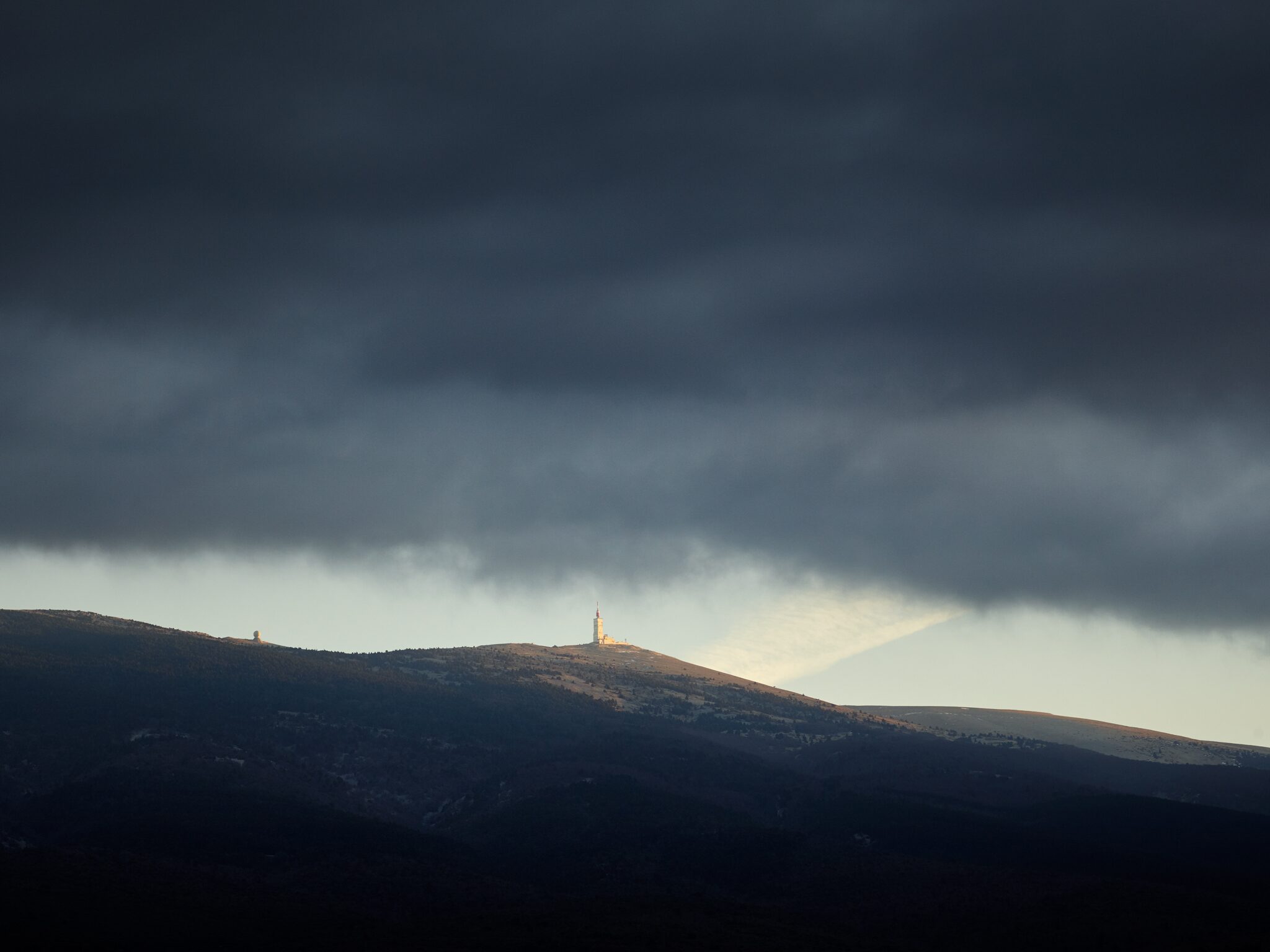
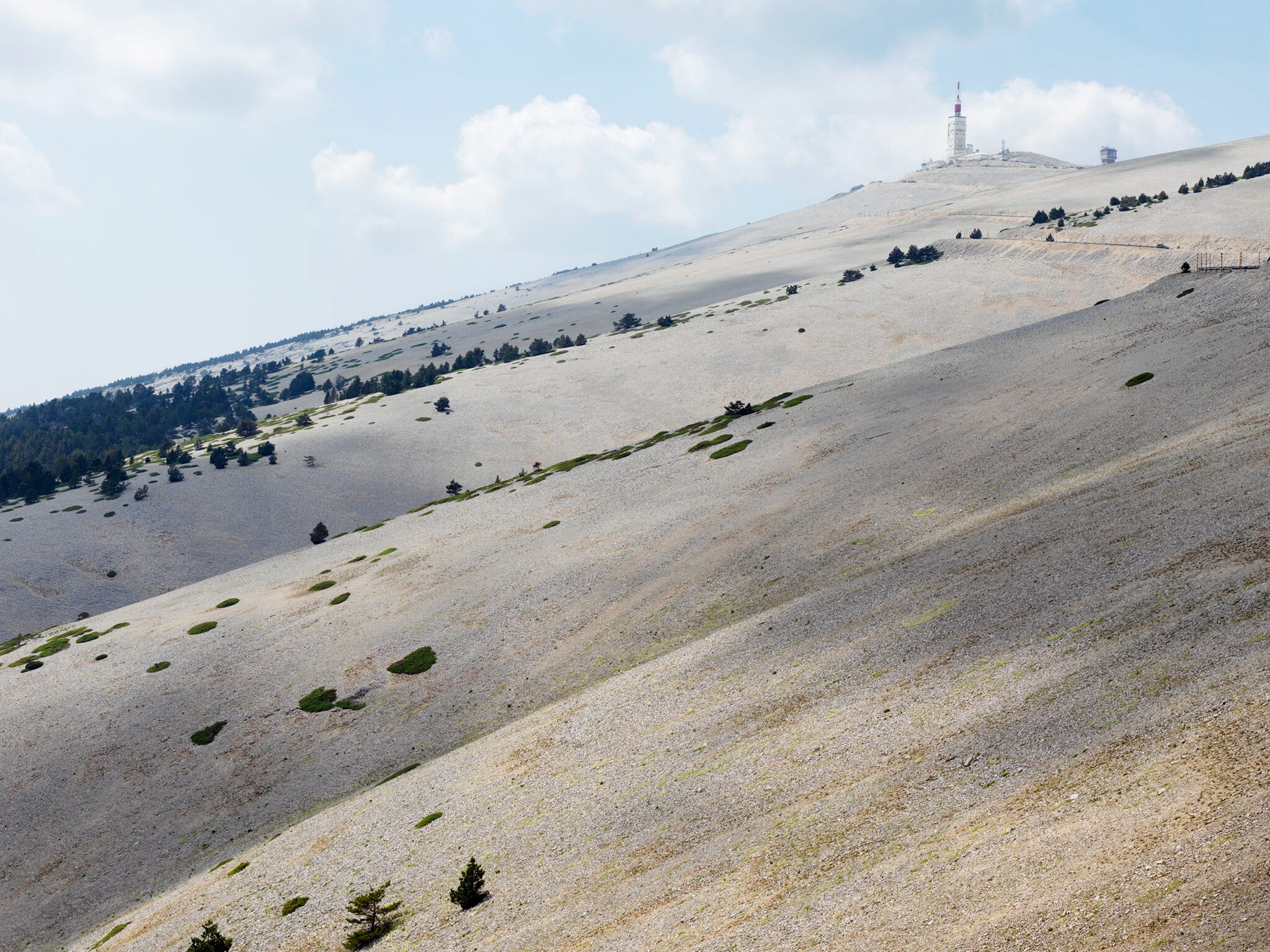
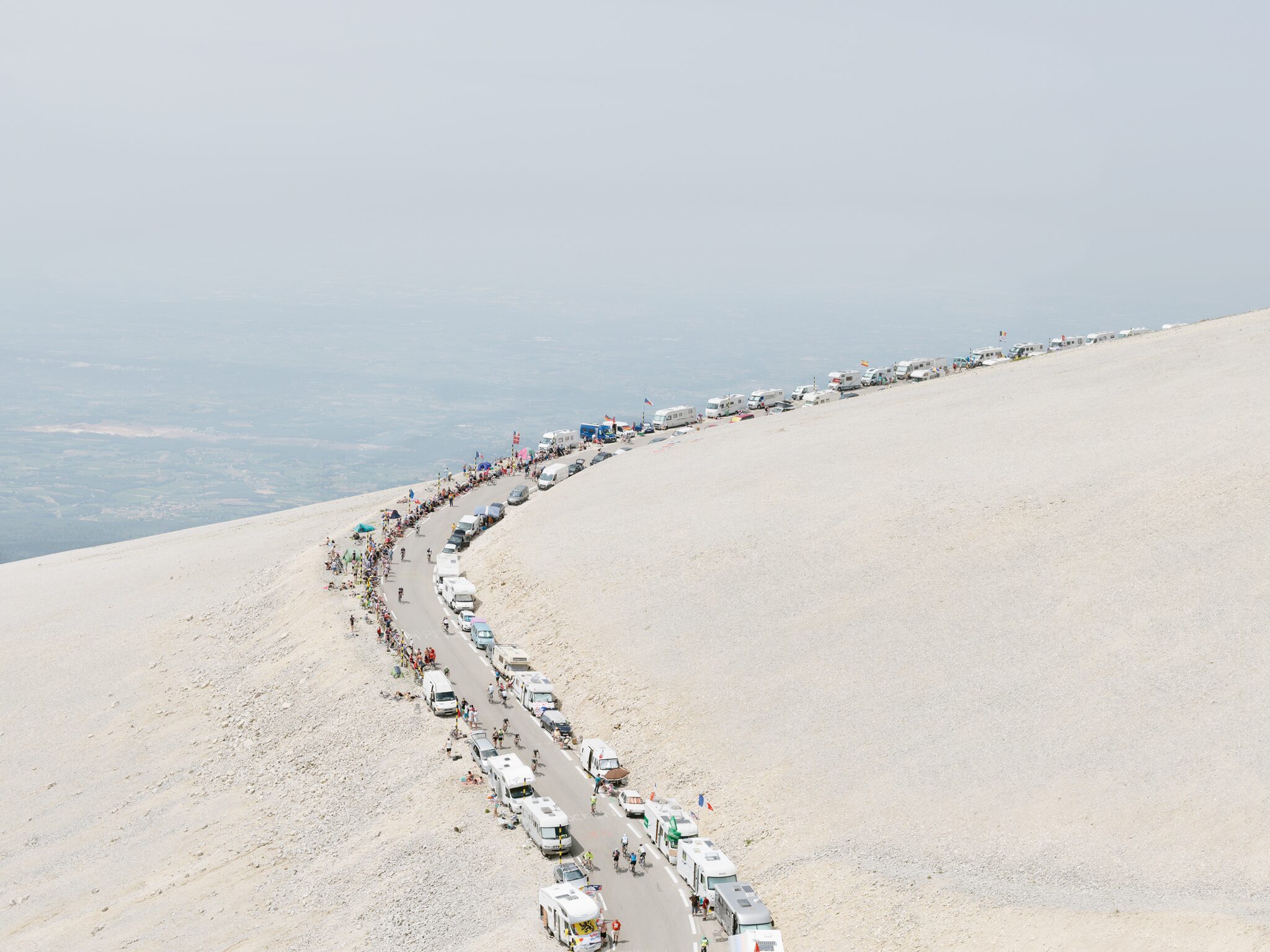
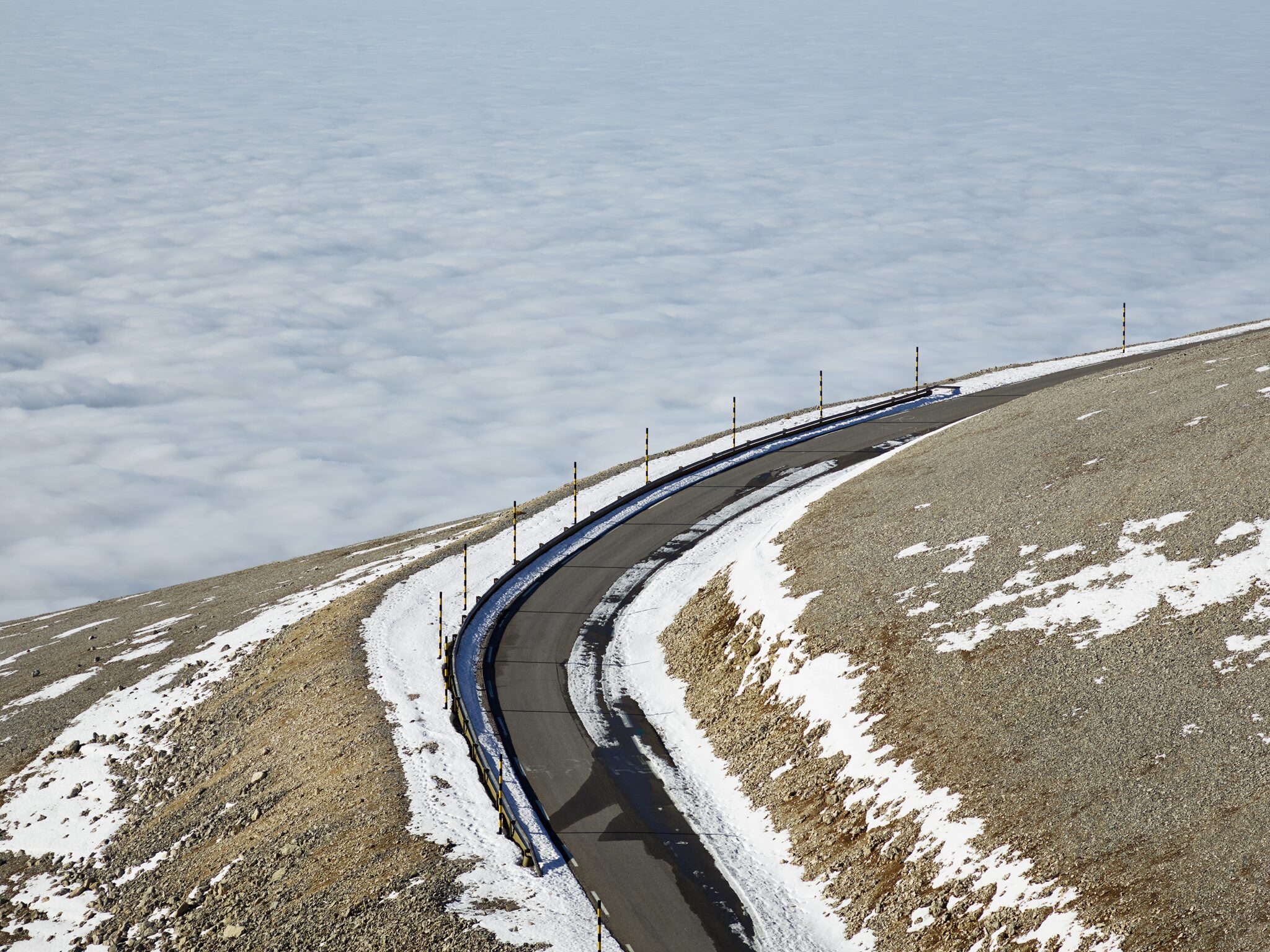
Ventoux stands alone. It is not part of a range and has no neighbouring summit to shelter behind, which is why the mistral arrives at the top unobstructed and why the last six kilometres are white — bare limestone scree above the treeline, and the reason the mountain has been called bald since long before anyone rode up it.
The ascent from Bédoin is twenty-one kilometres and 1,594 metres of climbing. The first five are almost flat, running through vineyards and orchards at three to four per cent, and they are a trap. At Saint-Estève the road turns left into the forest and the gradient jumps to nine and ten per cent, then holds there for nine consecutive kilometres with no descent, no flat and no view. Chalet Reynard at kilometre sixteen opens the landscape again, and the final ramp to the observatory is the steepest part of the climb.
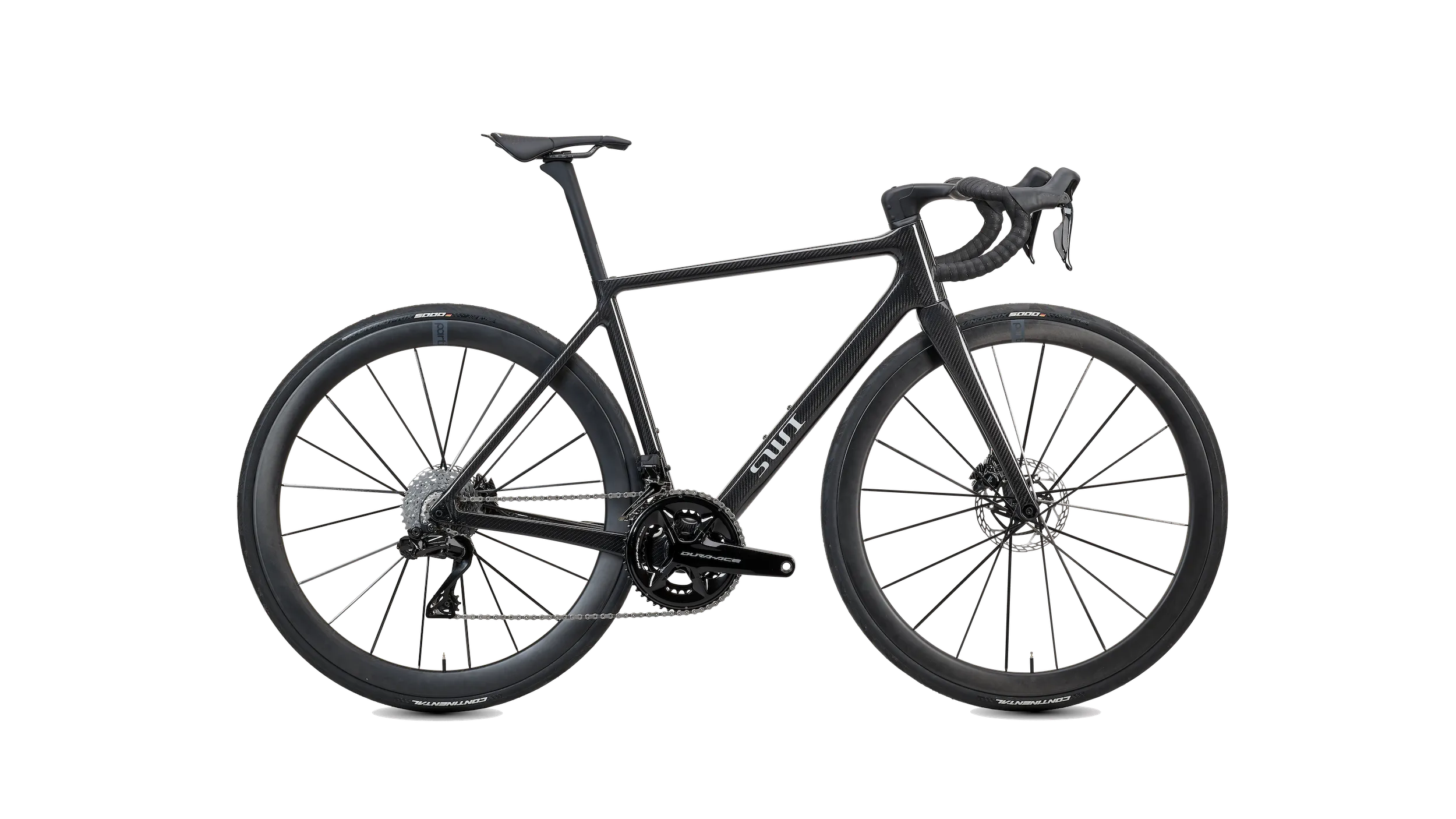
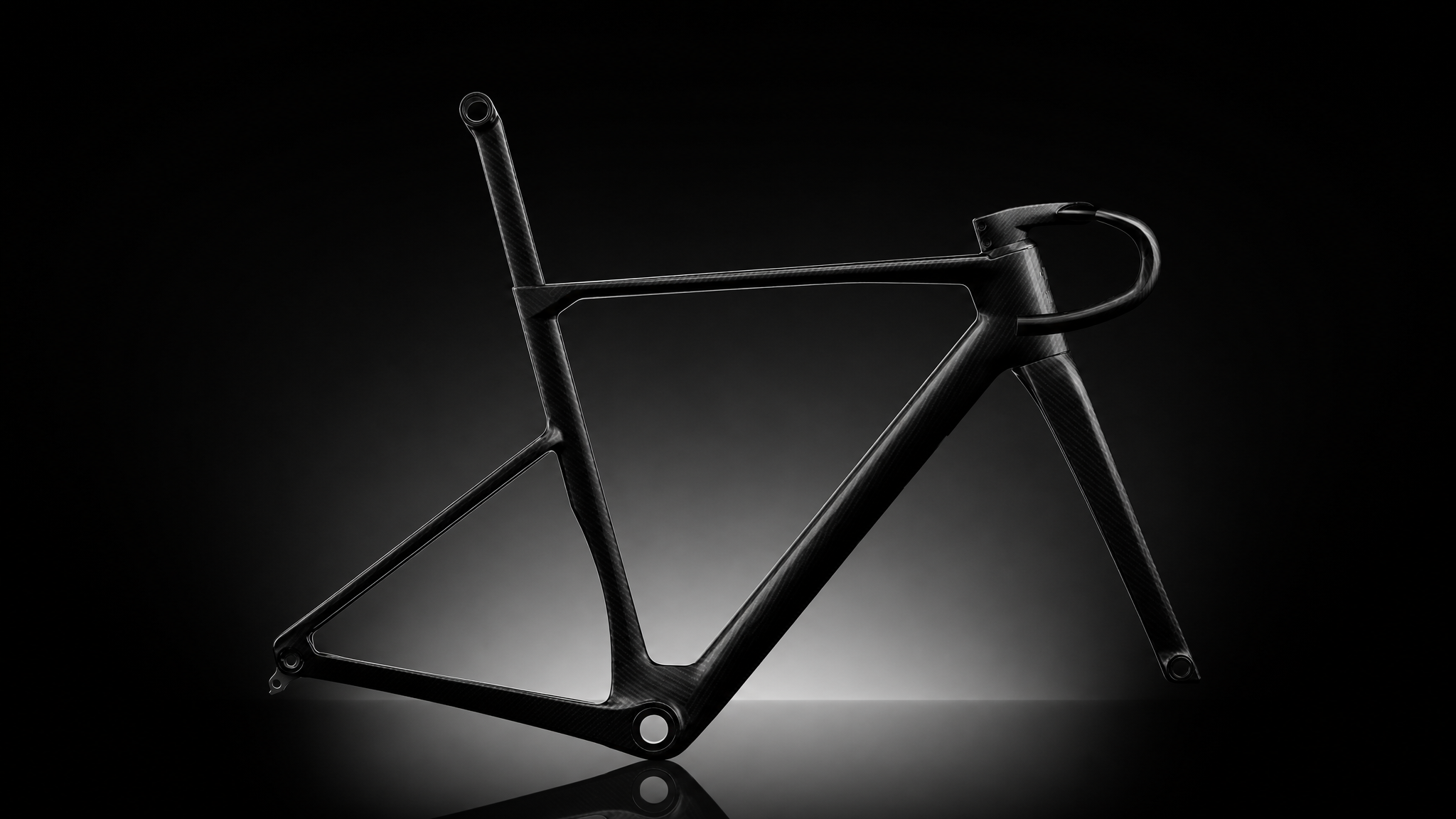
The forest is the test. It is ridden seated, at threshold, for the better part of an hour, and the frame that suits it is not the lightest one but the one tuned to hold its shape under a single rider's sustained input.
Photography
Michael Blann
Rider
Irina Krupovich
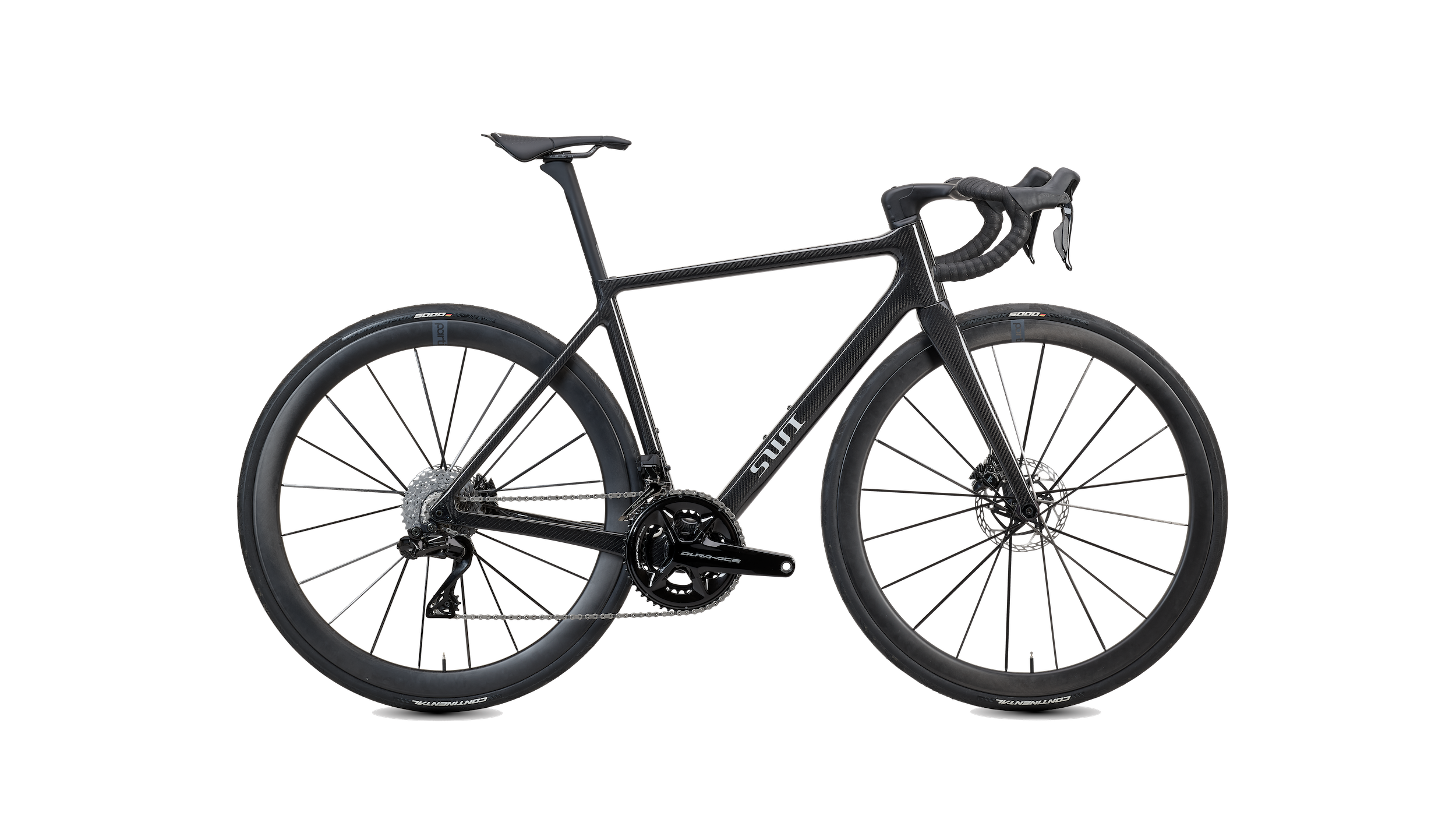
Every SWI is laid up for one rider — their weight, their power, the way they actually ride. One uninterrupted carbon shell, formed in a single mould, built for a body rather than a size chart. It is the whole reason the same mountain feels different underneath two frames.
Michael Blann
For the people who live beneath them the great European ranges are simply a way of life. For everyone else they are scenery. For a cyclist they are none of those things — they are an appointment with your own limits, and the reason a road that goes nowhere useful is worth riding at all.
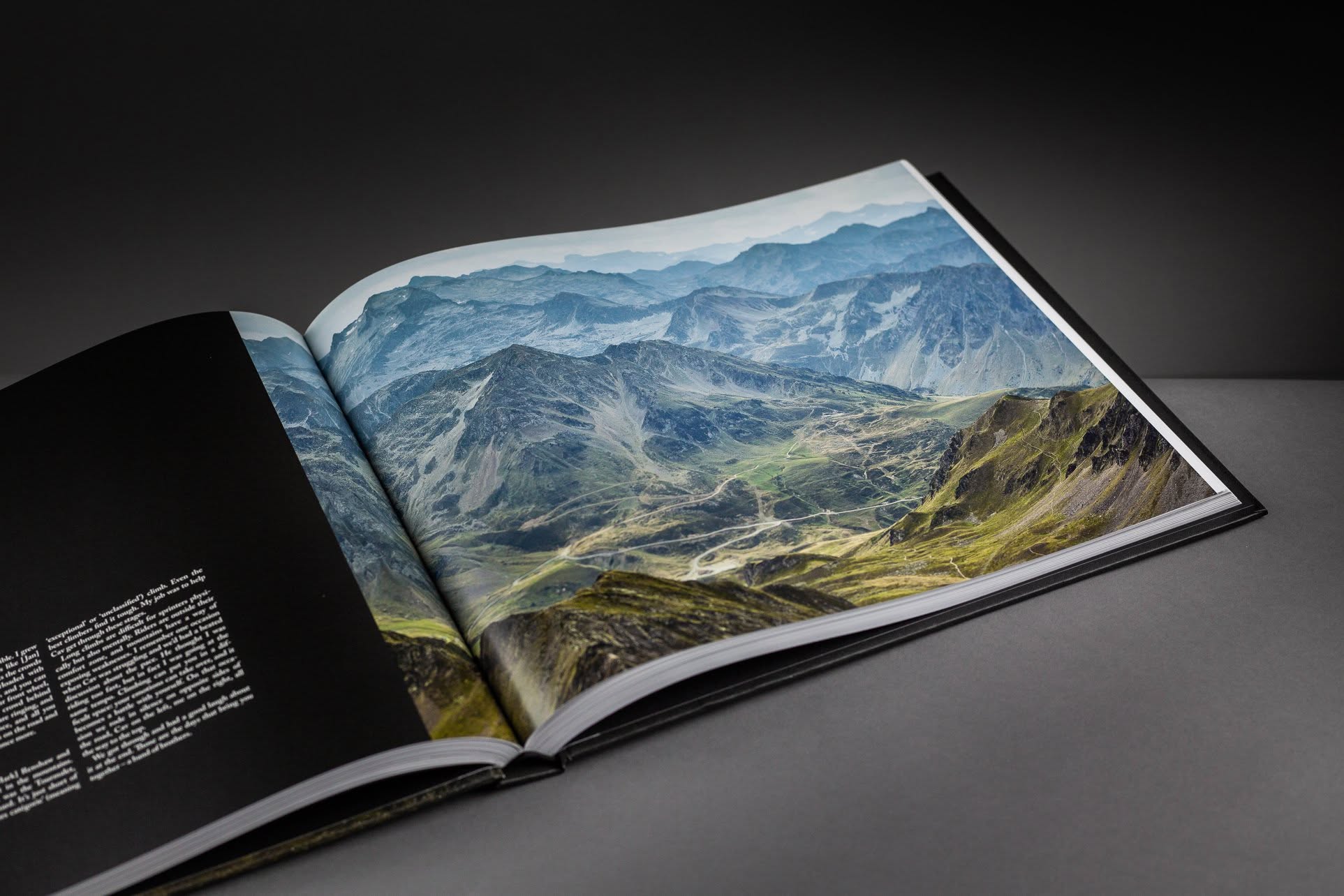
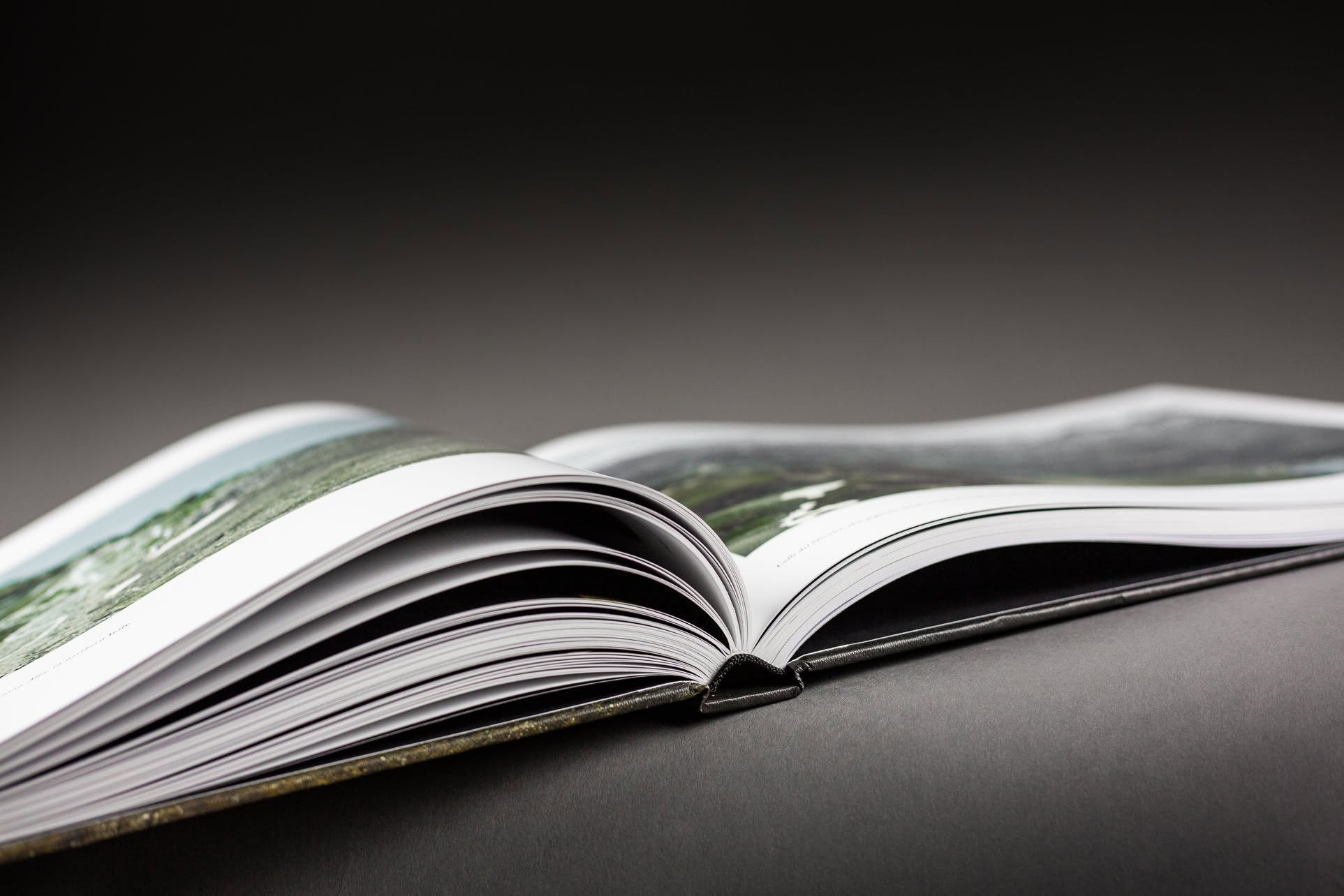
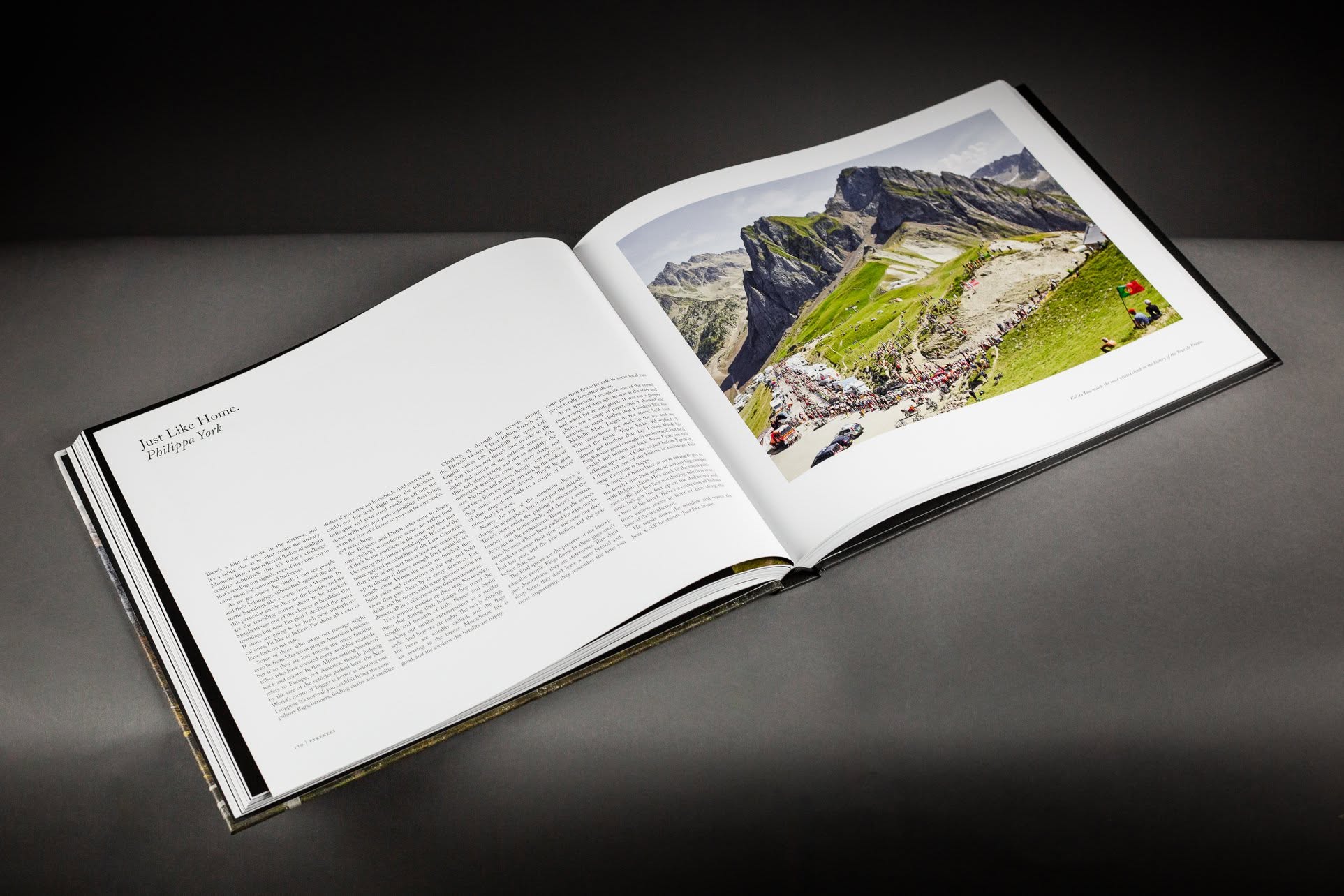
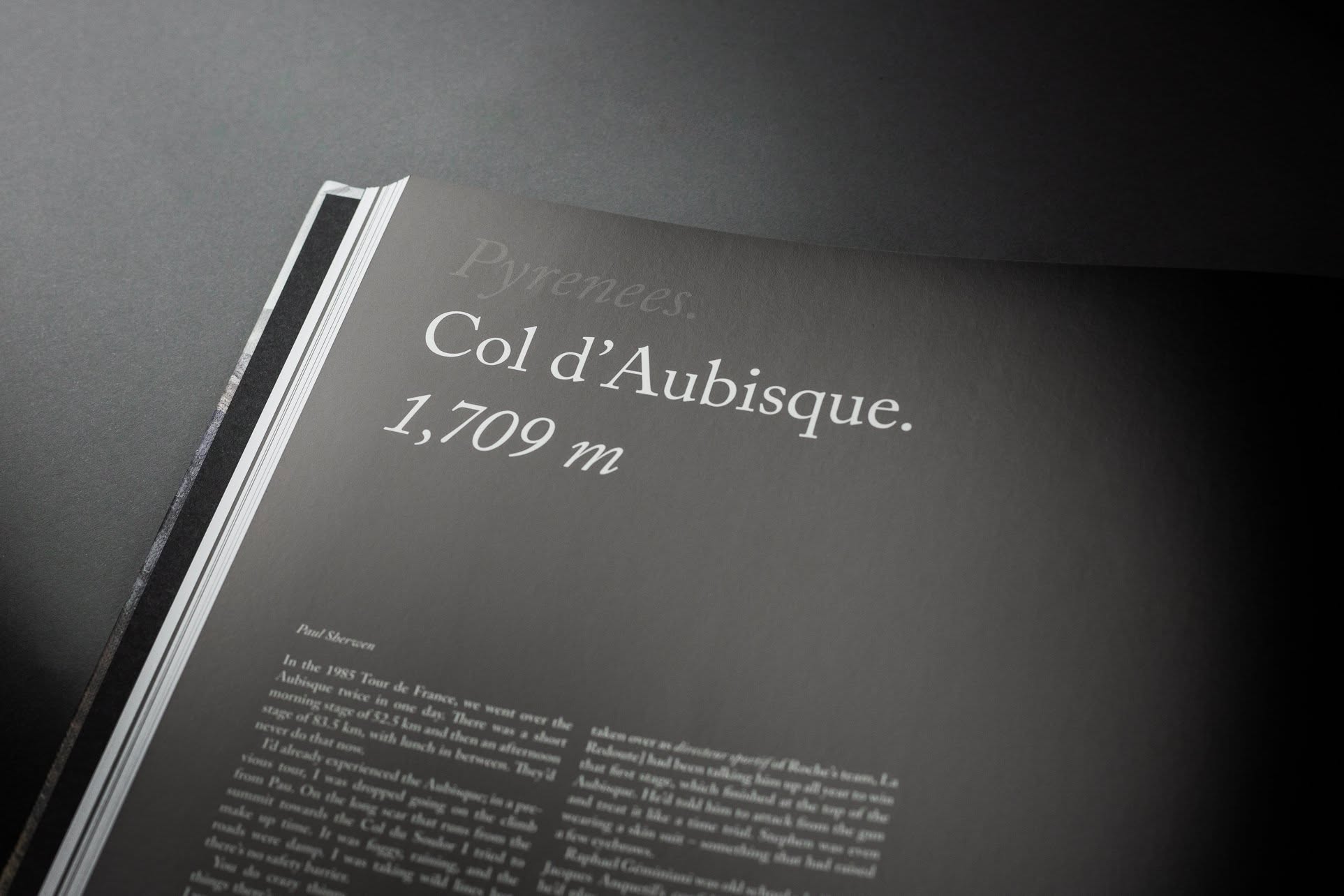
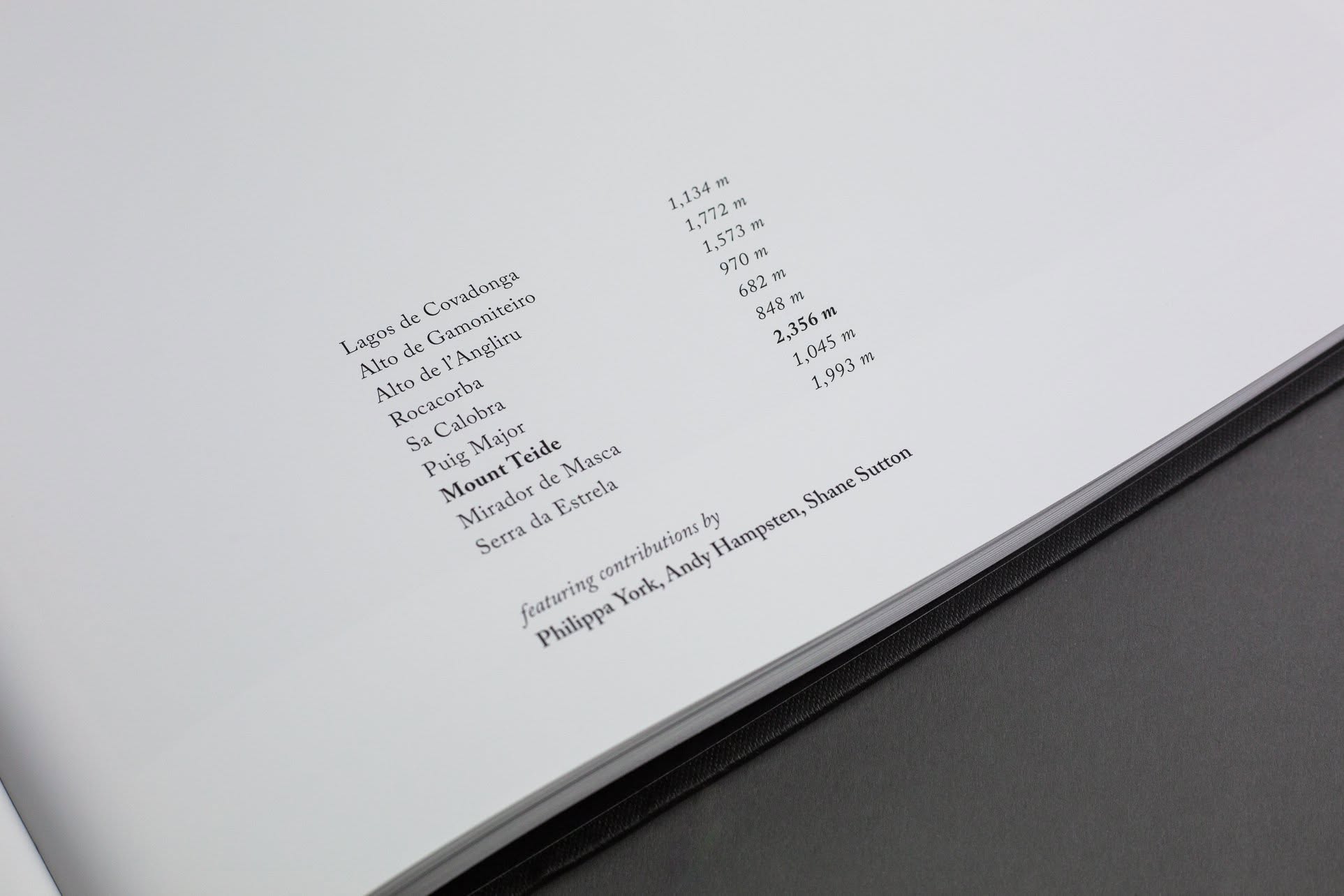
Michael Blann has spent years photographing the climbs that made the sport: the Alps, the Dolomites, the Pyrenees, the Ardennes. The pictures are landscape photography of a very high order, but the book is really about what those places do to the people who ride them — an argument built from light, weather and altitude, with recollections from professional riders threaded through it.
If you have ever ridden one of these roads, or intend to, it is the closest thing to being back on it.
Find the book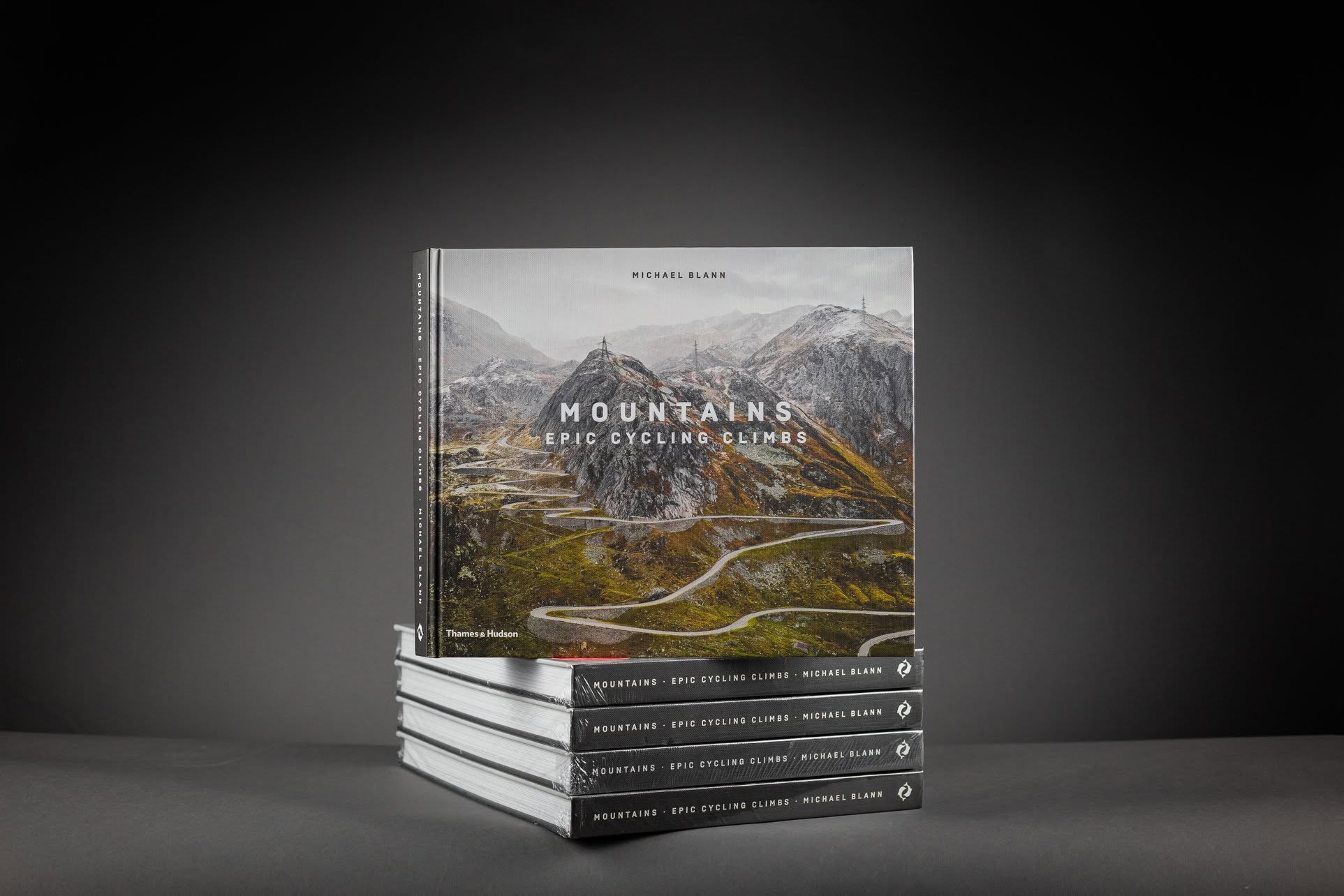
As Featured In





Tell us a little about yourself. We reply personally within 24 hours — no automated replies.
Something went wrong. Please try again.
Your details are kept private and never shared with third parties.
Your message is with the team in Italy and a confirmation is on its way to your inbox. We reply personally within 24 hours.